Special Web Offer - Get 50% OFF!
Grab Your Deal Now
PlantSnap
Plant Care
Cilantro
(Coriandrum sativum)
Also Known As
Cilantro, Coriander, Chinese parsley, Dhania
About This Plant
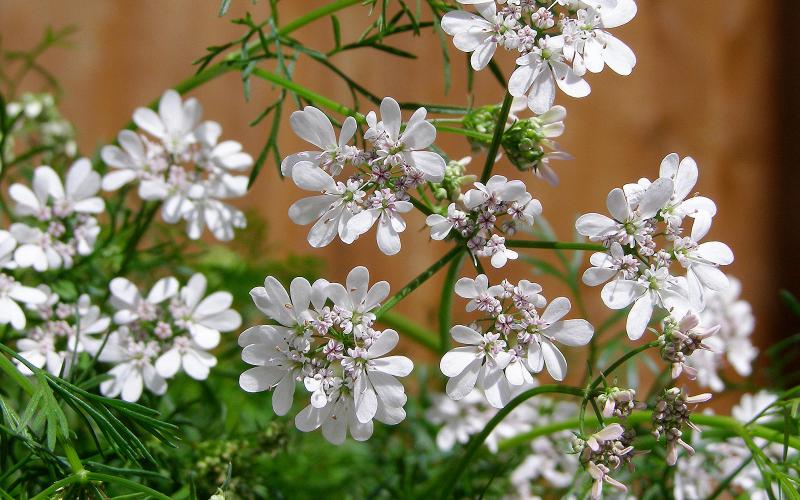
Coriandrum sativum is an annual herb in the Apiaceae family, commonly known as coriander or cilantro. It is native to regions spanning from southern Europe and North Africa to southwestern Asia. The plant grows up to 50 cm (20 inches) tall and has thin, branching stems with small, feathery leaves. It produces small, white or pink flowers that develop into round, ribbed seeds.
Plant Care Instructions
Outdoor Size Range
20-24 inches (50-60 cm)
Light Requirements
Coriander requires full sun to partial shade, with at least 6 hours of direct sunlight per day. Indoors, place the plant near a south-facing window.
Humidity Needs
Coriander prefers moderate humidity levels, around 40-50%. If the air is too dry, mist the plant regularly or place a humidifier nearby.
Fertilizing Schedule
Fertilize the plant every 2-3 weeks with a balanced liquid fertilizer. Avoid overfertilizing, as this can cause the plant to bolt (produce flowers and seeds prematurely).
Pruning Guidelines
Pinch back the tips of the stems to encourage bushier growth and prevent the plant from becoming leggy. Harvest leaves and stems regularly to promote new growth.
Common Pests and Diseases
Common pests that affect coriander include aphids, spider mites, and whiteflies. Diseases such as powdery mildew and root rot can also be a problem.
Indoor Size Range
12-20 inches (30-50 cm)
Watering Schedule
Water the plant regularly, keeping the soil moist but not waterlogged. Allow the top inch of soil to dry out before watering again. Avoid overwatering, as this can cause root rot.
Temperature Range
Coriander grows best in temperatures between 60-75°F (15-24°C). It can tolerate slightly cooler temperatures but is sensitive to frost.
Growing Season
Coriander can be grown year-round in mild climates. In colder regions, it is best to plant in the spring or fall.
Growing Difficulty Level
Coriander is relatively easy to grow, but it can be challenging to keep the plant from bolting in hot weather. The plant has a short lifespan and needs to be replanted frequently to ensure a continuous supply of fresh leaves.
USDA Hardiness Zones
Coriander is typically grown as an annual, but it can be grown as a short-lived perennial in USDA hardiness zones 9-11.
Did You Know?
Coriander has a long history of use in cooking and medicine, dating back to ancient Egypt. The seeds are used as a spice, while the leaves are used as an herb. In some cultures, coriander is believed to have aphrodisiac properties.
