Special Web Offer - Get 50% OFF!
Grab Your Deal Now
PlantSnap
Plant Care
Oyster mushroom
(Pleurotus ostreatus)
Also Known As
Oyster mushroom, Pearl oyster mushroom, Tree oyster
About This Plant
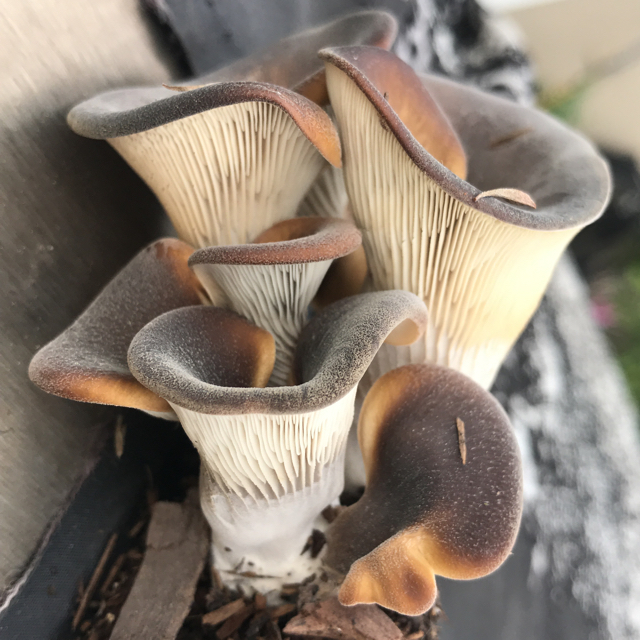
Pleurotus ostreatus, commonly known as oyster mushroom, is a species of edible mushroom. It is a saprotrophic fungus that grows naturally on dead wood logs and stumps. The fruiting body of the mushroom is shell-shaped and ranges in color from light gray to dark brown.
Plant Care Instructions
Outdoor Size Range
3-8 inches (7.6-20.3 cm)
Light Requirements
Oyster mushrooms require moderate to high light levels, ideally getting 6-8 hours of indirect sunlight per day. Direct sunlight can be harmful to the mushrooms and should be avoided.
Humidity Needs
Oyster mushrooms require high humidity levels, ideally between 80-90%. This can be achieved by misting the mushrooms regularly or placing a humidifier near the growing area.
Fertilizing Schedule
Oyster mushrooms do not require fertilizer, but adding a nitrogen-rich substrate can help increase yields.
Pruning Guidelines
Oyster mushrooms do not require pruning, but the fruiting body should be harvested when it reaches maturity to prevent spore release.
Common Pests and Diseases
Common pests and diseases for oyster mushrooms include mites, flies, and bacterial blotch.
Indoor Size Range
N/A
Watering Schedule
Oyster mushrooms require consistent moisture, but not waterlogged soil. They should be watered regularly, but allow the substrate to dry out slightly between waterings.
Temperature Range
Oyster mushrooms grow best in temperatures between 55-65°F (12-18°C). They can tolerate temperatures as low as 50°F (10°C) and as high as 75°F (24°C), but growth will be slower.
Growing Season
Oyster mushrooms can be grown year-round indoors, but outdoor cultivation is best during the spring and fall.
Growing Difficulty Level
Oyster mushrooms are relatively easy to grow, making them a popular choice for home cultivation.
USDA Hardiness Zones
Oyster mushrooms are not rated for USDA hardiness zones as they are typically grown indoors or in controlled environments.
Did You Know?
Oyster mushrooms are not only delicious, but also have potential medicinal benefits. They contain beta-glucans, which have been shown to boost the immune system and have anti-tumor properties.
