Special Web Offer - Get 50% OFF!
Grab Your Deal Now
PlantSnap
Plant Care
Augustinii azalea
(Rhododendron augustinii)
Also Known As
Augustinii azalea, Augusta rhododendron, Blue rhododendron, Chinese rhododendron
About This Plant
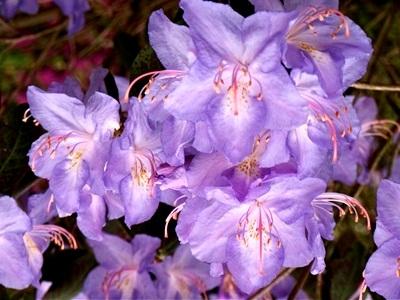
Rhododendron augustinii is an evergreen shrub that grows up to 3 meters in height. It has dark green leaves that are 7-15 cm long and 2-4 cm wide. The plant produces clusters of pale blue to lavender flowers with purple spots on the upper lobe.
Plant Care Instructions
Outdoor Size Range
6-10 feet (1.8-3 meters)
Light Requirements
Rhododendron augustinii prefers partial shade to full sun. It can tolerate some shade, but too much shade will result in poor flowering.
Humidity Needs
Rhododendron augustinii prefers high humidity and should be misted regularly. It can also benefit from a humidifier in dry environments.
Fertilizing Schedule
Rhododendron augustinii requires regular fertilization during the growing season. A balanced fertilizer with equal amounts of nitrogen, phosphorus, and potassium is recommended. Fertilizer should be applied every 2-3 weeks.
Pruning Guidelines
Pruning should be done after flowering to avoid cutting off next year's flower buds. Deadheading spent flowers can also encourage more blooms. The plant can be shaped by selective pruning of branches.
Common Pests and Diseases
Common pests for Rhododendron augustinii include lace bugs, spider mites, and whiteflies. Diseases such as powdery mildew and root rot can also occur.
Indoor Size Range
Not suitable for indoor growth
Watering Schedule
The plant requires regular watering, especially during the growing season. The soil should be kept moist but not waterlogged. Watering should be reduced in the winter months.
Temperature Range
The plant prefers cool temperatures between 60-70°F (15-21°C). It can tolerate temperatures as low as 20°F (-6°C) but is sensitive to high temperatures above 80°F (27°C).
Growing Season
The growing season for Rhododendron augustinii is in the spring and summer months.
Growing Difficulty Level
Rhododendron augustinii is moderately difficult to grow. It requires specific growing conditions and can be sensitive to changes in temperature and humidity.
USDA Hardiness Zones
Rhododendron augustinii is hardy in USDA zones 7-9.
Did You Know?
Rhododendron augustinii is native to the Himalayas and was first discovered by the French botanist Jules Émile Planchon in 1854.