Special Web Offer - Get 50% OFF!
Grab Your Deal Now
PlantSnap
Plant Care
Golden bell
(Forsythia)
Also Known As
Golden bell, Winter jasmine
About This Plant
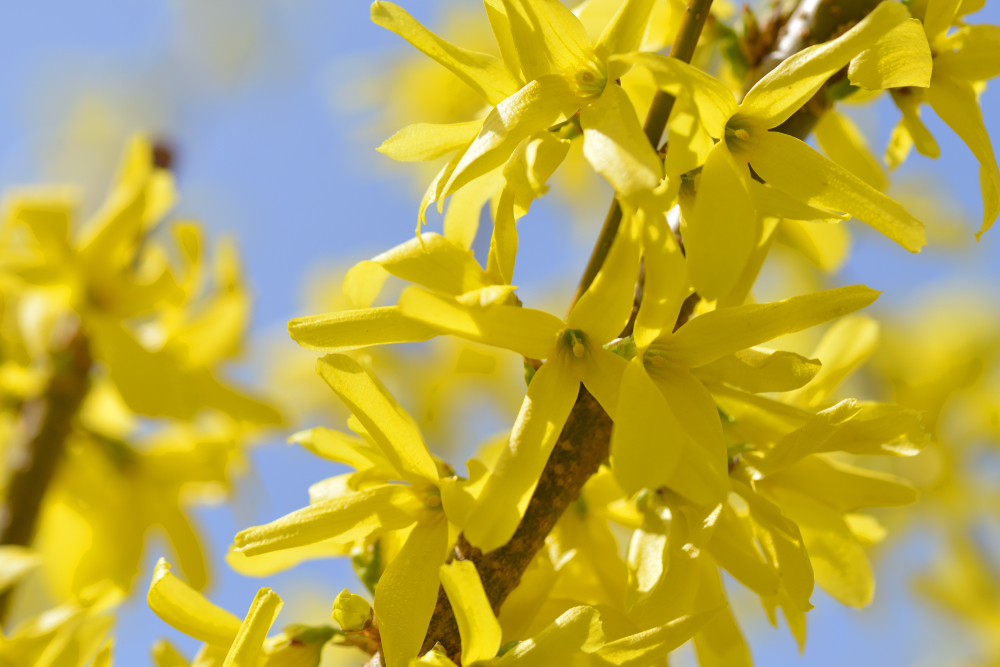
Forsythia is a deciduous shrub that is known for its bright yellow flowers. The plant has a bushy habit and can grow up to 10 feet (3 meters) tall and wide. Its leaves are simple, dark green, and ovate. The flowers are produced in early spring before the leaves appear, and they are usually 1 to 2 inches (2.5 to 5 cm) in diameter.
Plant Care Instructions
Outdoor Size Range
6 to 10 feet (1.8 to 3 meters) tall and wide
Light Requirements
Forsythia prefers full sun to partial shade. It can tolerate some shade, but flowering may be reduced.
Humidity Needs
Forsythia does not have specific humidity requirements.
Fertilizing Schedule
Forsythia benefits from regular fertilization with a balanced fertilizer. Feed the plant in early spring before new growth begins.
Pruning Guidelines
Prune Forsythia after flowering to maintain its shape and promote new growth. Remove any dead, damaged, or diseased wood.
Common Pests and Diseases
Forsythia is generally pest-free, but it can be susceptible to aphids, spider mites, and scale insects. Treat infestations with insecticidal soap or horticultural oil.
Indoor Size Range
Not suitable for indoor cultivation
Watering Schedule
The plant requires regular watering, especially during the growing season. It prefers well-drained soil and does not tolerate waterlogged conditions.
Temperature Range
The plant is hardy and can tolerate a wide range of temperatures. It can survive in USDA hardiness zones 5 to 8.
Growing Season
The growing season for Forsythia is in spring and early summer when it produces its bright yellow flowers. The plant goes dormant in the fall and winter.
Growing Difficulty Level
Forsythia is easy to grow and requires minimal maintenance.
USDA Hardiness Zones
USDA hardiness zones 5 to 8
Did You Know?
Forsythia is named after William Forsyth, a Scottish botanist who was the head gardener to King George III. The plant is native to China but has been cultivated in Europe and North America since the 1800s.
