Special Web Offer - Get 50% OFF!
Grab Your Deal Now
PlantSnap
Plant Care
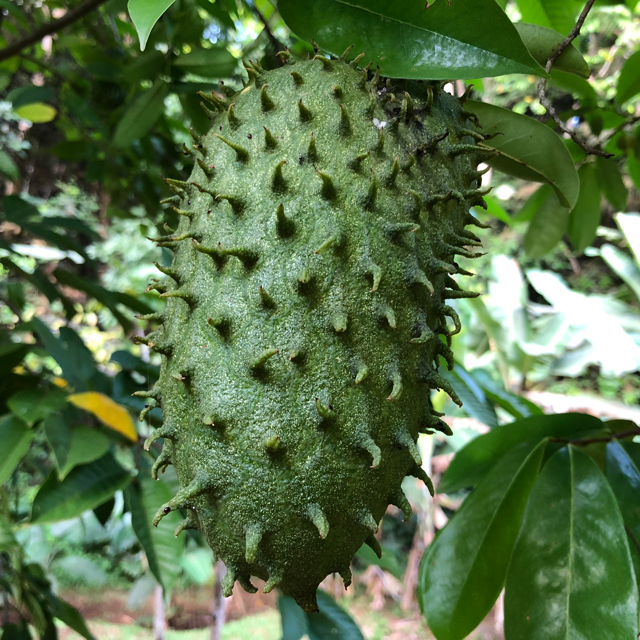
Soursop
(Annona muricata)
Also Known As
Soursop, Graviola, Guyabano, Cherimoya de montaña, Brazilian pawpaw
About This Plant
Annona muricata is a tropical plant species that produces edible fruits commonly known as soursop. It belongs to the Annonaceae family and is native to the Caribbean, Central America, and northern South America. The plant has a small, evergreen tree that can grow up to 10 meters tall with large, dark green, glossy leaves and yellow-green flowers that bloom in clusters.
Plant Care Instructions
Outdoor Size Range
10-20 feet (3-6 meters)
Light Requirements
Soursop plants prefer full sun to partial shade, with at least 6 hours of direct sunlight daily.
Humidity Needs
The plant prefers a high humidity environment, around 80%.
Fertilizing Schedule
Fertilize the plant every 2-3 months with a balanced fertilizer. Avoid over-fertilizing, as this can lead to salt buildup and damage the roots.
Pruning Guidelines
Prune the tree to remove dead or damaged branches, and to control its growth. Soursop trees can be trained to grow in a bushy shape or a single-trunked tree.
Common Pests and Diseases
Common pests and diseases for soursop trees include fruit flies, mealybugs, scale insects, and anthracnose.
Indoor Size Range
6-8 feet (1.8-2.4 meters)
Watering Schedule
Water the plant regularly, keeping the soil moist but not waterlogged. Reduce watering during the winter months.
Temperature Range
Soursop plants thrive in warm temperatures between 68-86°F (20-30°C), and can tolerate brief periods of colder temperatures down to 41°F (5°C).
Growing Season
Soursop plants can be grown year-round in tropical regions, and in the summer months in temperate regions.
Growing Difficulty Level
Soursop plants can be moderately difficult to grow, as they require specific temperature, humidity, and light conditions. However, with proper care, they can thrive and produce fruit.
USDA Hardiness Zones
Soursop plants are hardy in USDA zones 10-11.
Did You Know?
Soursop leaves have traditionally been used in natural medicine to treat a variety of ailments, including fever, cough, and inflammation.
