Special Web Offer - Get 50% OFF!
Grab Your Deal Now
PlantSnap
Plant Care
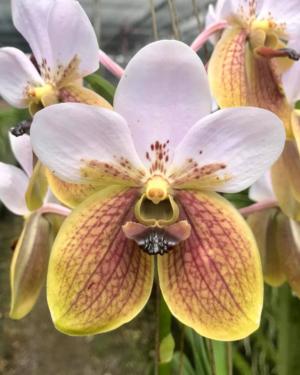
Waling-waling
(Vanda sanderiana)
Also Known As
Waling-waling, Sanders' vanda, Vanda orchid, Sander's orchid
About This Plant
Vanda sanderiana is a species of orchid native to the Philippines. It is commonly known as Waling-waling or Sander's Vanda. The plant has a monopodial growth habit and can grow up to 1 meter (3.3 feet) tall. It has long, strap-like leaves and produces large, fragrant flowers that can be up to 12 cm (4.7 inches) in diameter.
Plant Care Instructions
Outdoor Size Range
Up to 1 meter (3.3 feet) tall
Light Requirements
Vanda sanderiana requires bright, filtered light. Direct sunlight can burn the leaves and flowers. It is best to place the plant near a window that faces east or west.
Humidity Needs
Vanda sanderiana requires high humidity levels, between 50-70%. It is best to place the plant on a tray filled with pebbles and water to increase humidity levels. Misting the plant with water can also help to increase humidity.
Fertilizing Schedule
The plant should be fertilized every two weeks during the growing season with a balanced fertilizer. In the winter months, fertilizing should be reduced.
Pruning Guidelines
Pruning is not necessary for Vanda sanderiana, but dead or damaged leaves and flowers should be removed to promote new growth.
Common Pests and Diseases
Common pests for Vanda sanderiana include mealybugs, spider mites, and scale insects. Diseases such as root rot and leaf spot can also occur.
Indoor Size Range
Not suitable for indoor cultivation
Watering Schedule
The plant should be watered regularly during the growing season, but should be allowed to dry out slightly between waterings. In the winter months, watering should be reduced. The plant should be watered in the morning, allowing the leaves and roots to dry before nightfall.
Temperature Range
Vanda sanderiana prefers warm temperatures between 18-30°C (65-85°F). It should be protected from cold drafts and temperatures below 15°C (59°F).
Growing Season
Vanda sanderiana grows best during the summer months.
Growing Difficulty Level
Vanda sanderiana is considered difficult to grow due to its high humidity and temperature requirements. It is best suited for experienced orchid growers.
USDA Hardiness Zones
Not applicable, as it is a tropical plant.
Did You Know?
In the Philippines, Vanda sanderiana is considered the 'Queen of Philippine Flowers' and is highly prized for its beauty and rarity. It is also a protected species, and the collection and trade of wild specimens is illegal.
