Special Web Offer - Get 50% OFF!
Grab Your Deal Now
PlantSnap
Plant Care
Common cattail
(Typha latifolia)
Also Known As
Common cattail, Bulrush, Pussy willow, Reed mace
About This Plant
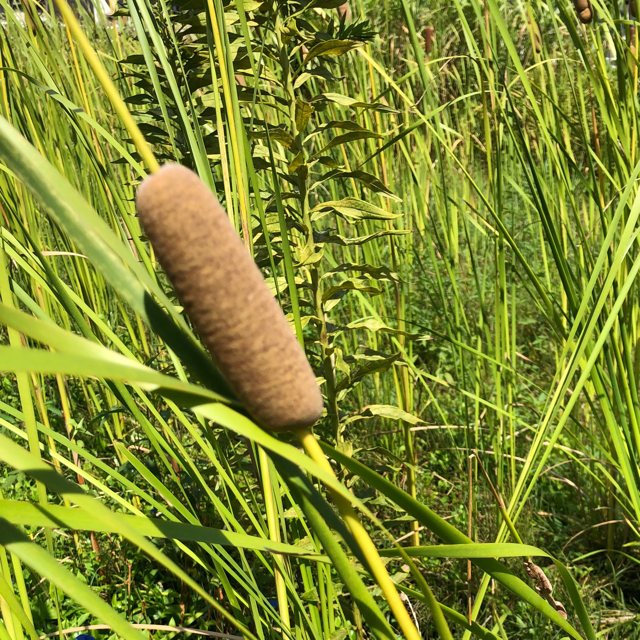
Typha latifolia, commonly known as cattail, is a tall perennial plant that grows in wetlands and along the edges of ponds, lakes, and rivers. It is easily recognizable by its long, cylindrical, brown flower spikes that resemble a hot dog on a stick.
Plant Care Instructions
Outdoor Size Range
Height: 3-10 feet (0.9-3 meters), Spread: 3-6 feet (0.9-1.8 meters)
Light Requirements
Cattails prefer full sun but can tolerate some shade.
Humidity Needs
Cattails prefer high humidity and are often found in wetlands and near bodies of water.
Fertilizing Schedule
Cattails do not require fertilizer.
Pruning Guidelines
Cattails do not require pruning, but dead flower spikes can be removed for aesthetic purposes.
Common Pests and Diseases
Cattails are relatively pest-free, but can be susceptible to rust and leaf spot diseases.
Indoor Size Range
Not suitable for indoor growing
Watering Schedule
Cattails are water-loving plants and require consistently moist soil or water up to 6 inches (15 cm) deep.
Temperature Range
Cattails can tolerate a wide range of temperatures, from freezing to over 100°F (38°C).
Growing Season
Cattails grow in the summer and fall, and the flowers bloom from June to August.
Growing Difficulty Level
Cattails are easy to grow and can even become invasive in some areas.
USDA Hardiness Zones
Cattails can grow in USDA hardiness zones 3-10.
Did You Know?
Cattails have a variety of uses, including as a food source (the young shoots can be eaten like asparagus), as a material for weaving baskets and mats, and as a natural water filtration system.
