Special Web Offer - Get 50% OFF!
Grab Your Deal Now
PlantSnap
Plant Care
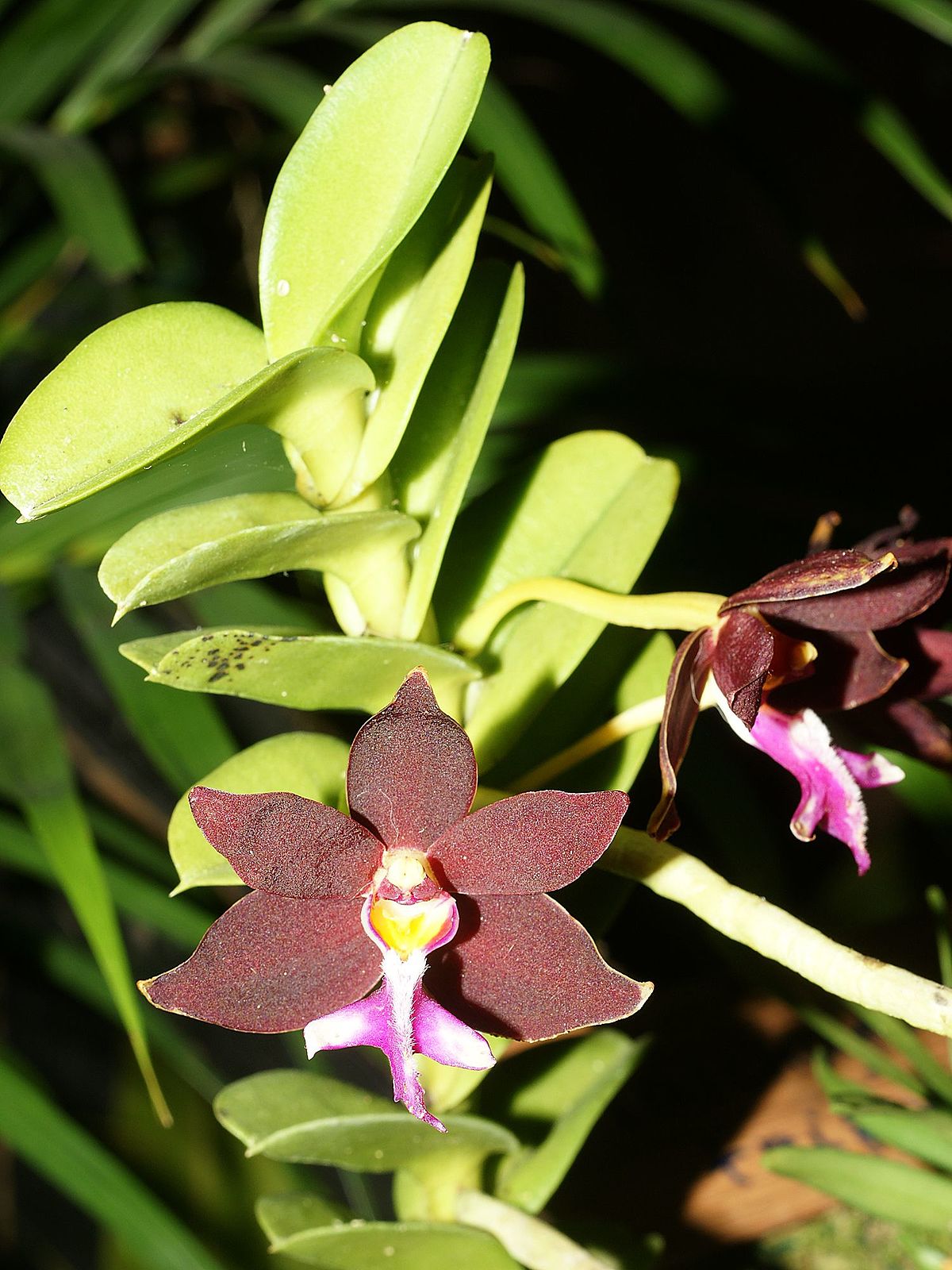
Dark purple trichoglottis
(Trichoglottis atropurpurea)
Also Known As
Dark purple trichoglottis, Purple trichoglottis, Black purple orchid
About This Plant
Trichoglottis atropurpurea is a species of orchid native to the Philippines, Borneo, and Sulawesi. It has a unique appearance with small, dark purple flowers with yellow and white markings, and long, thin leaves that grow up to 12 inches (30 cm) long. It is a epiphytic plant, meaning it grows on other plants, and can be found in lowland and hill forests.
Plant Care Instructions
Outdoor Size Range
12-24 inches (30-60 cm)
Light Requirements
Trichoglottis atropurpurea prefers bright, indirect light. It can tolerate some direct sunlight in the morning or late afternoon, but too much direct sunlight can burn the leaves.
Humidity Needs
Trichoglottis atropurpurea prefers high humidity levels, around 60-70%. This can be achieved by placing the plant on a tray of pebbles filled with water, or by using a humidifier.
Fertilizing Schedule
Fertilize Trichoglottis atropurpurea every two weeks during the growing season with a balanced orchid fertilizer. During the dormant season, fertilize once a month. It is important not to over-fertilize as this can damage the roots.
Pruning Guidelines
Pruning should be done after flowering to remove any dead or damaged leaves or stems. This will help to promote new growth and prevent disease.
Common Pests and Diseases
Common pests for Trichoglottis atropurpurea include spider mites, mealybugs, and scale insects. These can be treated with insecticidal soap or neem oil.
Indoor Size Range
12-24 inches (30-60 cm)
Watering Schedule
Watering should be done when the potting mix feels dry to the touch. It is important not to overwater as this can lead to root rot. Watering once a week is usually sufficient, but this may vary depending on the humidity and temperature of the environment.
Temperature Range
Trichoglottis atropurpurea prefers temperatures between 60-80°F (15-27°C). It can tolerate slightly cooler temperatures at night, but should be protected from temperatures below 50°F (10°C).
Growing Season
Trichoglottis atropurpurea grows best during the spring and summer months, when temperatures are warmer and humidity is higher.
Growing Difficulty Level
Trichoglottis atropurpurea can be moderately difficult to grow, as it requires specific conditions to thrive. However, with proper care and attention, it can be a rewarding plant to grow.
USDA Hardiness Zones
Trichoglottis atropurpurea is not a cold-hardy plant and is best grown indoors or in a greenhouse. It is not assigned to any USDA hardiness zone.
Did You Know?
The name Trichoglottis comes from the Greek words 'trichos' meaning hair and 'glotta' meaning tongue, referring to the hairy lip of the flower.
