Special Web Offer - Get 50% OFF!
Grab Your Deal Now
PlantSnap
Plant Care
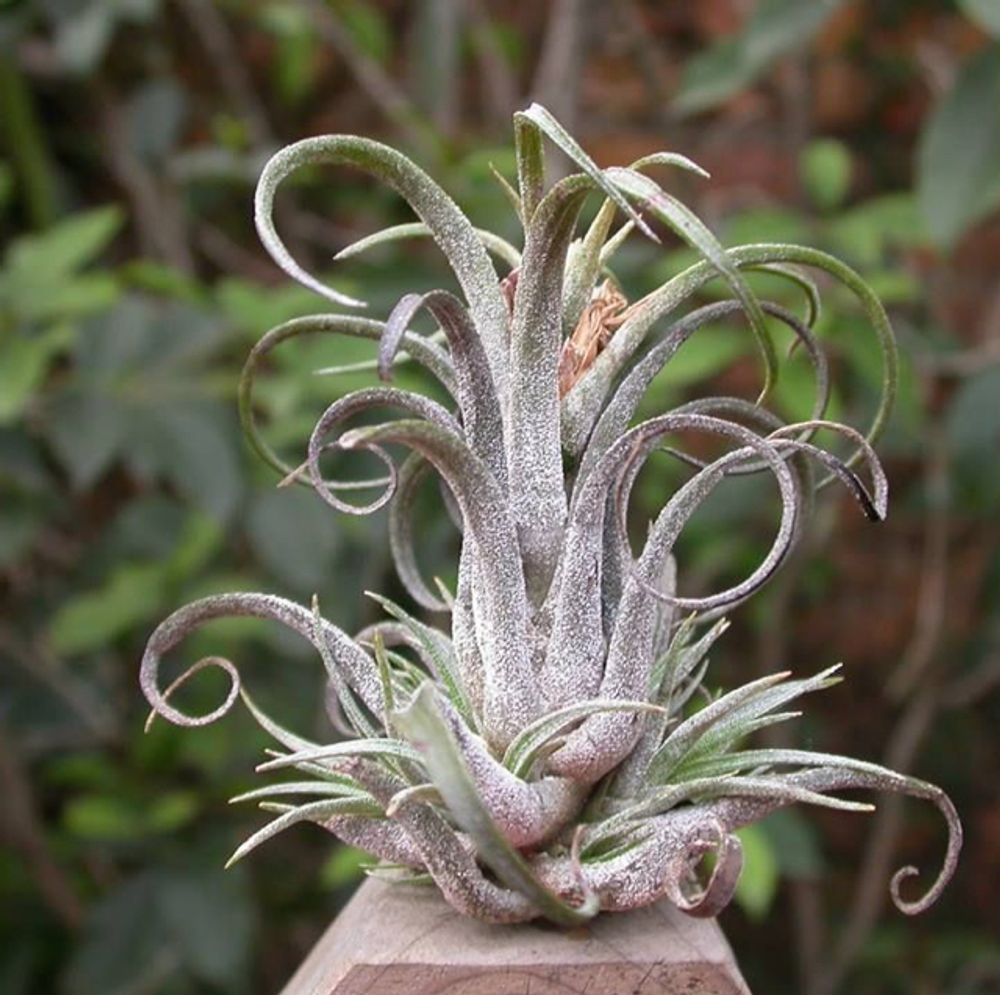
Medusa's head
(Tillandsia caput-medusae)
Also Known As
Medusa's head, Air plant, Tillandsia medusa
About This Plant
Tillandsia caput-medusae is a species of flowering plant in the Bromeliaceae family. It is an epiphyte, which means it grows on other plants or objects without being parasitic. The plant has long, narrow leaves that curl back towards the base, giving it the appearance of a head of snakes. It produces a bright red inflorescence with yellow flowers that bloom in the spring.
Plant Care Instructions
Outdoor Size Range
4-6 inches (10-15 cm)
Light Requirements
Tillandsia caput-medusae prefers bright, indirect light. It can tolerate some direct sunlight, but too much can cause the leaves to burn.
Humidity Needs
Tillandsia caput-medusae prefers high humidity levels, around 50-60%. It can be grown in a humid bathroom or near a humidifier.
Fertilizing Schedule
Tillandsia caput-medusae does not require fertilizer, but it can benefit from a monthly application of a bromeliad fertilizer diluted to half strength.
Pruning Guidelines
This plant does not require pruning, but dead leaves can be removed to improve its appearance.
Common Pests and Diseases
Common pests for Tillandsia caput-medusae include mealybugs and scale insects. These can be treated with a solution of water and dish soap or with a systemic insecticide.
Indoor Size Range
4-6 inches (10-15 cm)
Watering Schedule
This plant should be watered once a week by misting or soaking it in water for 30 minutes. It is important to shake off any excess water after watering to prevent rot.
Temperature Range
This plant prefers temperatures between 50-90°F (10-32°C). It can tolerate cooler temperatures but should be protected from frost.
Growing Season
Tillandsia caput-medusae can be grown year-round as long as it is kept in a warm and humid environment.
Growing Difficulty Level
Tillandsia caput-medusae is considered easy to grow as it does not require soil and can be grown indoors or outdoors.
USDA Hardiness Zones
Tillandsia caput-medusae is not frost hardy and should be grown indoors or in a greenhouse. It is suitable for USDA hardiness zones 10-11.
Did You Know?
Tillandsia caput-medusae is named after the Greek mythological creature Medusa, who had snakes for hair. The plant's leaves resemble snakes, hence the name 'Medusa's head air plant'.
