Special Web Offer - Get 50% OFF!
Grab Your Deal Now
PlantSnap
Plant Care
Western red cedar
(Thuja plicata)
Also Known As
Western red cedar, Giant arborvitae, Pacific red cedar
About This Plant
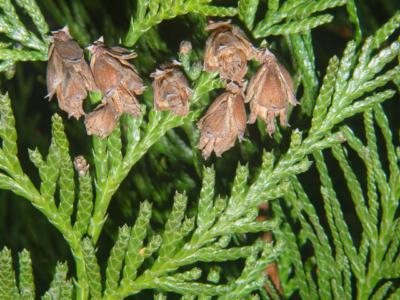
Thuja plicata is a species of coniferous tree in the Cupressaceae family, native to western North America. It is commonly known as western red cedar and is one of the most valuable trees in the Pacific Northwest. The tree has a conical shape with a broad base and a narrow, pointed top. Its leaves are scale-like and arranged in opposite pairs along the twigs. The cones are small and brown, and the bark is fibrous and reddish-brown.
Plant Care Instructions
Outdoor Size Range
50-80 feet (15-24 meters) tall and 15-25 feet (4.5-7.6 meters) wide
Light Requirements
Thuja plicata prefers full sun to partial shade.
Humidity Needs
The tree prefers moist air but can tolerate dry air.
Fertilizing Schedule
The tree does not require fertilizer, but it can benefit from a slow-release fertilizer applied in the spring.
Pruning Guidelines
Pruning should be done in the late winter or early spring before new growth begins. The tree can be pruned to maintain its shape or to remove dead or damaged branches.
Common Pests and Diseases
Thuja plicata is susceptible to a number of pests and diseases, including cedar apple rust, spider mites, and bagworms.
Indoor Size Range
N/A
Watering Schedule
The tree needs regular watering, especially during the first few years after planting. After that, it can tolerate drought.
Temperature Range
Thuja plicata can tolerate a wide range of temperatures, from -40°F (-40°C) to 100°F (38°C).
Growing Season
Spring and summer are the best times to plant Thuja plicata.
Growing Difficulty Level
Thuja plicata is relatively easy to grow and maintain.
USDA Hardiness Zones
Thuja plicata can be grown in USDA hardiness zones 5 to 9.
Did You Know?
Thuja plicata is the provincial tree of British Columbia, Canada, and is used extensively in the region's First Nations culture for totem poles, canoes, and other traditional items.
