Special Web Offer - Get 50% OFF!
Grab Your Deal Now
PlantSnap
Plant Care
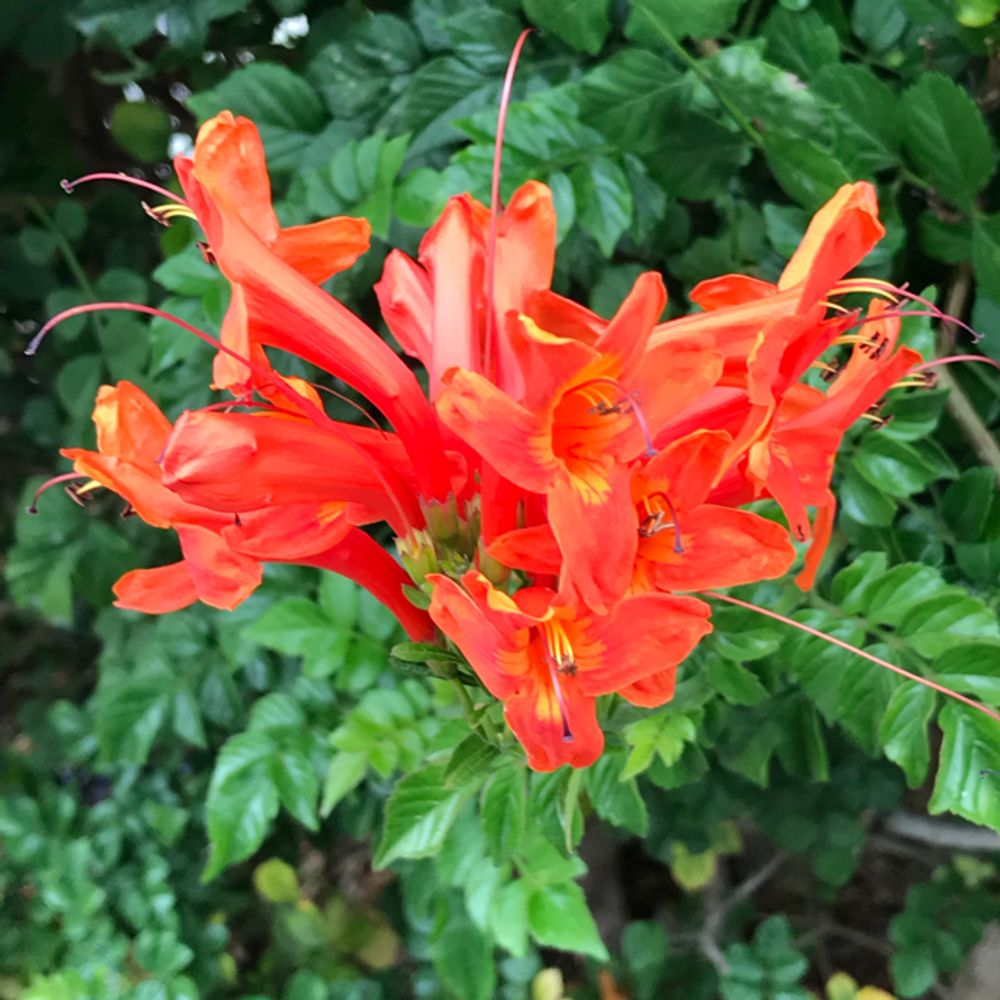
Cape honeysuckle
(Tecoma capensis)
Also Known As
Cape honeysuckle, Cape honeybell, Honeysuckle bush
About This Plant
Tecoma capensis is a species of flowering shrub native to South Africa. It is a fast-growing, evergreen shrub that can grow up to 10 feet (3 meters) tall and 6 feet (1.8 meters) wide. The plant produces clusters of trumpet-shaped flowers in shades of pink, orange, and red.
Plant Care Instructions
Outdoor Size Range
6-10 feet (1.8-3 meters) tall and 4-6 feet (1.2-1.8 meters) wide
Light Requirements
Tecoma capensis requires full sun to partial shade. It should receive at least 6 hours of direct sunlight per day.
Humidity Needs
Tecoma capensis can tolerate a range of humidity levels, but it prefers moderate humidity.
Fertilizing Schedule
Tecoma capensis benefits from regular fertilization during the growing season. Use a balanced fertilizer every 4-6 weeks.
Pruning Guidelines
The plant should be pruned in the late winter or early spring before new growth appears. It can be pruned heavily to maintain a desired shape or size.
Common Pests and Diseases
Tecoma capensis is relatively pest and disease-resistant, but it can be affected by spider mites, mealybugs, and scale insects.
Indoor Size Range
24-36 inches (61-91 cm) tall and 18-24 inches (46-61 cm) wide
Watering Schedule
The plant should be watered deeply once a week during the growing season, and less frequently during the winter months. It prefers well-draining soil and should not be allowed to sit in water.
Temperature Range
The plant can tolerate a wide range of temperatures, but it prefers temperatures between 50-80°F (10-27°C). It is not frost-tolerant.
Growing Season
Tecoma capensis grows best in the spring and summer months.
Growing Difficulty Level
Tecoma capensis is relatively easy to grow, but it requires regular maintenance and pruning to keep it healthy and looking its best.
USDA Hardiness Zones
Tecoma capensis is hardy in USDA zones 9-11.
Did You Know?
Tecoma capensis is a popular plant for attracting hummingbirds and butterflies to the garden.
