Special Web Offer - Get 50% OFF!
Grab Your Deal Now
PlantSnap
Plant Care
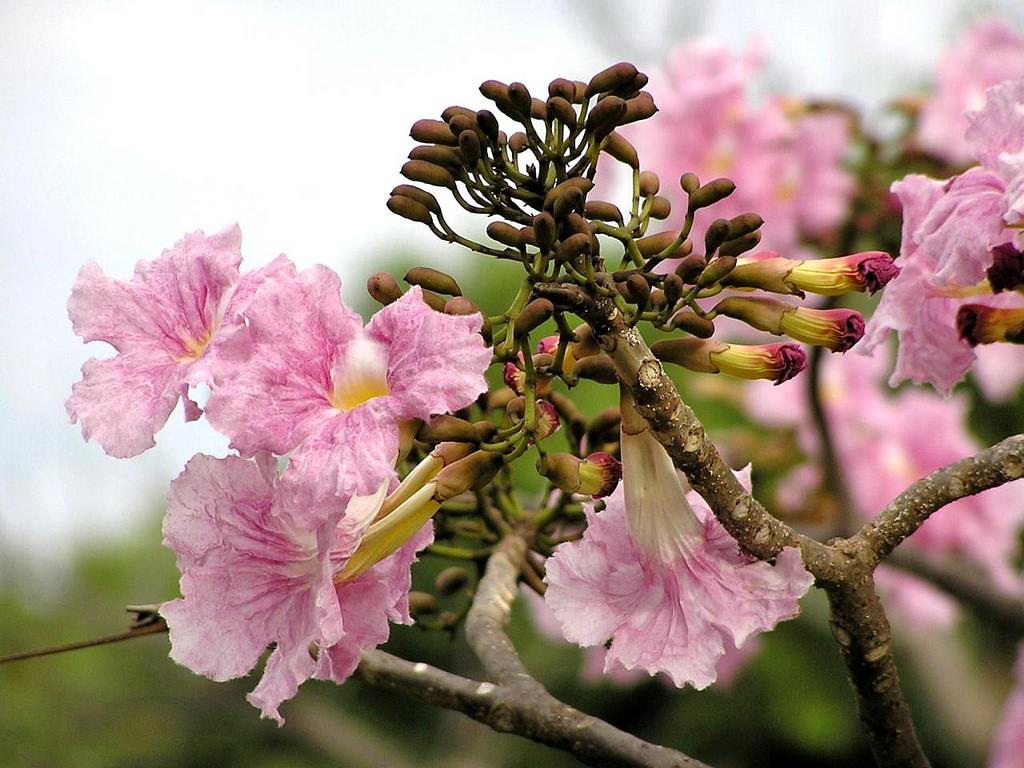
Pink poui
(Tabebuia rosea)
Also Known As
Pink poui, Pink trumpet tree, Rosy trumpet tree, Tecoma, Tabebuia, Ipe rosa
About This Plant
Tabebuia rosea is a species of flowering plant in the family Bignoniaceae, native to the tropical regions of Central and South America. It is a deciduous tree that can reach up to 30 meters in height, with a wide-spreading canopy and a straight trunk that can be up to 100 cm in diameter.
Plant Care Instructions
Outdoor Size Range
Height: 20-30 meters (65-100 feet), Spread: 10-15 meters (30-50 feet)
Light Requirements
Tabebuia rosea requires full sun to thrive and produce abundant blooms. It can tolerate some shade but will not flower as well.
Humidity Needs
Tabebuia rosea is adapted to a wide range of humidity levels and can tolerate both dry and humid conditions.
Fertilizing Schedule
Tabebuia rosea benefits from regular fertilization during the growing season with a balanced fertilizer. It is important to follow the instructions on the fertilizer package, as overfertilization can lead to salt buildup and damage to the roots.
Pruning Guidelines
Tabebuia rosea requires minimal pruning, mainly to remove dead or damaged branches. Pruning should be done in late winter or early spring before new growth appears.
Common Pests and Diseases
Tabebuia rosea is generally resistant to pests and diseases, but it can be occasionally affected by scale insects, mealybugs, and spider mites. These can be controlled with insecticidal soap or neem oil.
Indoor Size Range
Not suitable for indoor cultivation
Watering Schedule
Tabebuia rosea prefers moderate watering, but can tolerate some drought once established. It is important to avoid overwatering as it can lead to root rot.
Temperature Range
Tabebuia rosea prefers warm temperatures between 20-30°C (68-86°F), but can tolerate temperatures as low as 10°C (50°F) and as high as 40°C (104°F).
Growing Season
Tabebuia rosea blooms in late winter or early spring, and the growing season typically lasts from spring to fall.
Growing Difficulty Level
Tabebuia rosea is considered easy to grow, as it is adaptable to a wide range of growing conditions and requires minimal maintenance.
USDA Hardiness Zones
Tabebuia rosea is hardy in USDA zones 10-12.
Did You Know?
Tabebuia rosea is the national tree of El Salvador, where it is known as the Maquilishuat. Its wood is highly valued for its durability and resistance to insects and rot, and is used for making furniture, boats, and construction materials.