Special Web Offer - Get 50% OFF!
Grab Your Deal Now
PlantSnap
Plant Care
Fishbone cactus
(Selenicereus anthonyanus)
Also Known As
Fishbone cactus, Queen of the night, Fish bone cactus, Cactus de noche
About This Plant
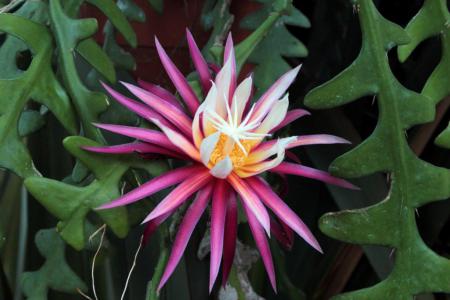
Selenicereus anthonyanus, commonly known as the fishbone cactus or zigzag cactus, is a species of cactus native to Mexico. It is a climbing cactus with long, flat, succulent stems that grow in a zigzag pattern, giving it its common name. The stems are covered in small, white spines and can grow up to 3 feet (91 cm) long. The plant produces fragrant, white flowers that bloom at night and are pollinated by bats.
Plant Care Instructions
Outdoor Size Range
Up to 3 feet (91 cm)
Light Requirements
The fishbone cactus prefers bright, indirect light. It can tolerate some direct sunlight, but too much can burn the leaves.
Humidity Needs
The fishbone cactus prefers a humid environment, but can tolerate lower humidity levels. Mist the plant occasionally to increase humidity.
Fertilizing Schedule
Fertilize the fishbone cactus once a month during the growing season with a balanced, water-soluble fertilizer. Do not fertilize during the winter months.
Pruning Guidelines
Prune the fishbone cactus to control its size and shape. Use clean, sharp scissors to cut back the stems. The plant can also be propagated from cuttings.
Common Pests and Diseases
The fishbone cactus is susceptible to mealybugs and spider mites. Inspect the plant regularly and treat any infestations promptly.
Indoor Size Range
6-12 inches (15-30 cm)
Watering Schedule
Water the fishbone cactus when the top inch of soil is dry. It is important not to overwater the plant, as it is susceptible to root rot. During the winter months, water sparingly.
Temperature Range
The fishbone cactus prefers temperatures between 60-80°F (15-27°C). It can tolerate temperatures as low as 50°F (10°C) and as high as 90°F (32°C).
Growing Season
The fishbone cactus can be grown year-round, but it prefers warmer temperatures during the growing season from spring to fall.
Growing Difficulty Level
The fishbone cactus is relatively easy to grow and care for, making it a popular choice for indoor gardening.
USDA Hardiness Zones
The fishbone cactus is not cold-hardy and should be grown indoors or in a greenhouse. It is not assigned a USDA hardiness zone.
Did You Know?
The fishbone cactus is also known as the 'Rick Rack Cactus' due to its zigzag pattern.
