Special Web Offer - Get 50% OFF!
Grab Your Deal Now
PlantSnap
Plant Care
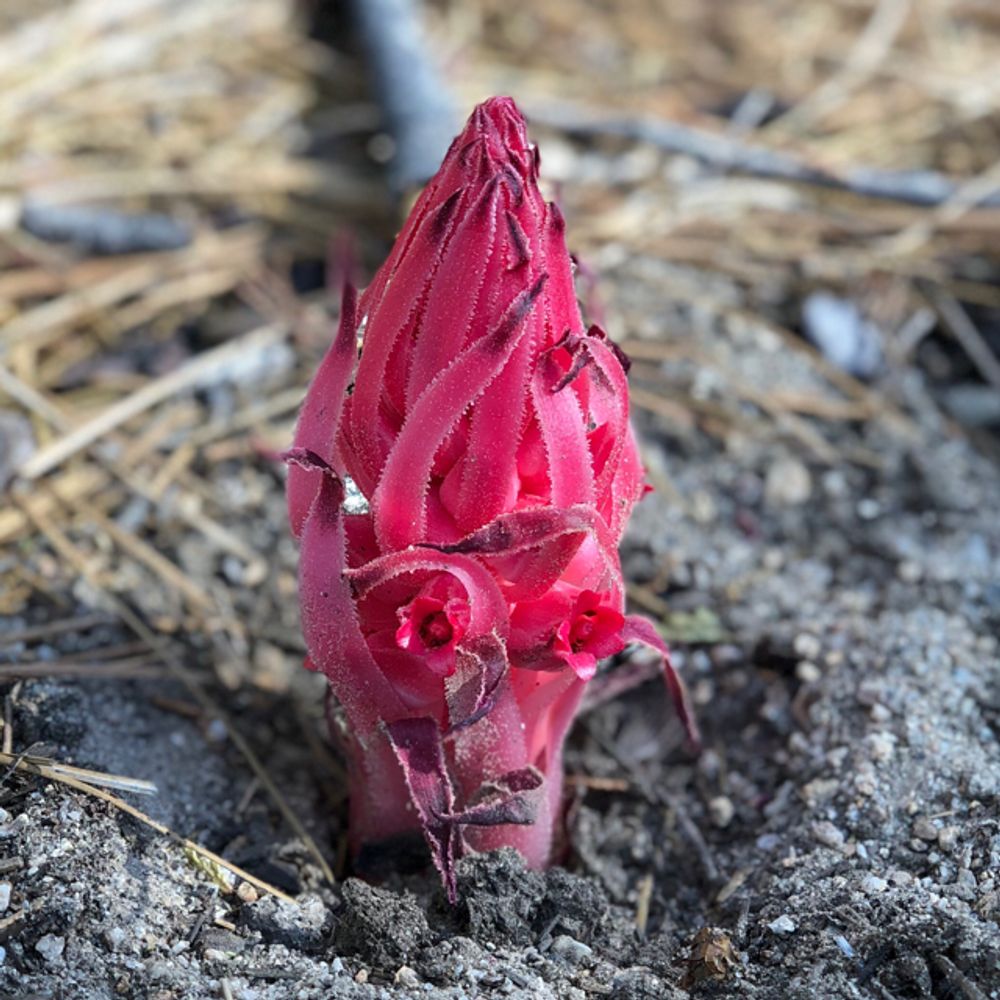
Snow plant
(Sarcodes sanguinea)
Also Known As
Snow plant, Red snow plant, Sarcodes
About This Plant
Sarcodes sanguinea is a species of plant in the heath family. It is a mycoheterotroph, meaning it obtains its nutrients from fungi that live in association with the roots of trees. The plant produces no chlorophyll and cannot photosynthesize its own food. Instead, it relies on the fungi to provide it with the necessary nutrients. The plant produces a single stem that terminates in a head of bright red flowers.
Plant Care Instructions
Outdoor Size Range
6-12 inches (15-30 cm) tall and 3-6 inches (7-15 cm) wide
Light Requirements
Sarcodes sanguinea prefers partial to full shade.
Humidity Needs
Sarcodes sanguinea prefers a humid environment.
Fertilizing Schedule
The plant does not require fertilizer.
Pruning Guidelines
The plant does not require pruning.
Common Pests and Diseases
Sarcodes sanguinea is not known to have any significant pest or disease problems.
Indoor Size Range
Not suitable for indoor cultivation
Watering Schedule
The plant requires moderate watering during the growing season and should be kept relatively dry during the dormant season.
Temperature Range
The plant can tolerate temperatures down to 20°F (-6°C) but prefers temperatures between 50-70°F (10-21°C).
Growing Season
Sarcodes sanguinea grows in the late spring and early summer.
Growing Difficulty Level
Sarcodes sanguinea is difficult to grow due to its mycoheterotrophic nature and specific growing requirements.
USDA Hardiness Zones
Sarcodes sanguinea is found in USDA hardiness zones 6 to 9.
Did You Know?
The bright red color of Sarcodes sanguinea's stem and flowers is due to the presence of anthocyanin pigments, which protect the plant from the intense sunlight found at high elevations where it grows.
