Special Web Offer - Get 50% OFF!
Grab Your Deal Now
PlantSnap
Plant Care
Black-eyed susan
(Rudbeckia hirta)
Also Known As
Black-eyed susan, Brown-eyed susan, Gloriosa daisy
About This Plant
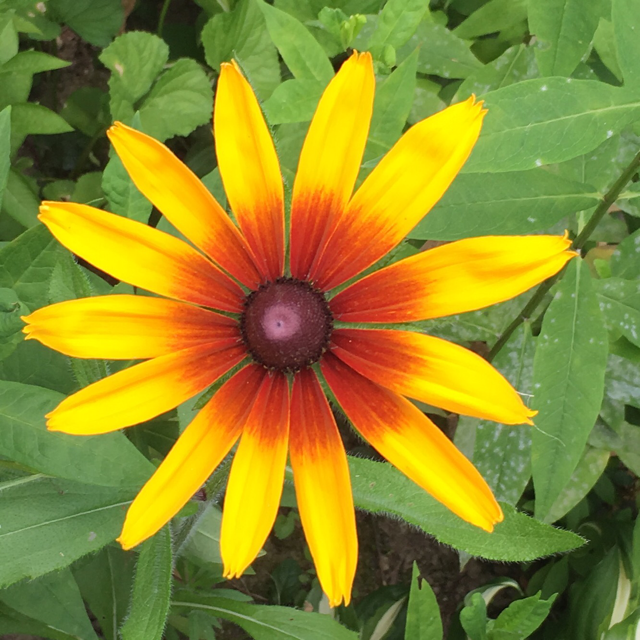
Rudbeckia hirta is a species of flowering plant in the family Asteraceae, native to North America. It is commonly known as the Black-eyed Susan because of its dark brown center and yellow petals. The plant has a bushy habit, with hairy stems and leaves.
Plant Care Instructions
Outdoor Size Range
24-36 inches (60-90 cm)
Light Requirements
Black-eyed Susans require full sun to partial shade. They thrive in bright sunlight but can tolerate some shade.
Humidity Needs
Black-eyed Susans prefer average humidity levels and can tolerate dry air.
Fertilizing Schedule
Feed the plant with a balanced fertilizer once a month during the growing season. Avoid over-fertilizing as it can cause the plant to produce more foliage than flowers.
Pruning Guidelines
Deadhead the flowers regularly to encourage more blooms. Cut back the stems in the fall to prevent self-seeding.
Common Pests and Diseases
Black-eyed Susans are generally pest and disease-free. However, they can be affected by powdery mildew, rust, and leaf spot.
Indoor Size Range
12-24 inches (30-60 cm)
Watering Schedule
Water the plant regularly, keeping the soil moist but not waterlogged. During hot and dry periods, water more frequently.
Temperature Range
The plant can tolerate a wide range of temperatures, from 60°F (15°C) to 90°F (32°C).
Growing Season
Black-eyed Susans bloom from mid-summer to fall.
Growing Difficulty Level
Black-eyed Susans are easy to grow and low maintenance, making them a popular choice for gardeners.
USDA Hardiness Zones
USDA hardiness zones 3 to 9
Did You Know?
The Black-eyed Susan is the state flower of Maryland.
