Special Web Offer - Get 50% OFF!
Grab Your Deal Now
PlantSnap
Plant Care
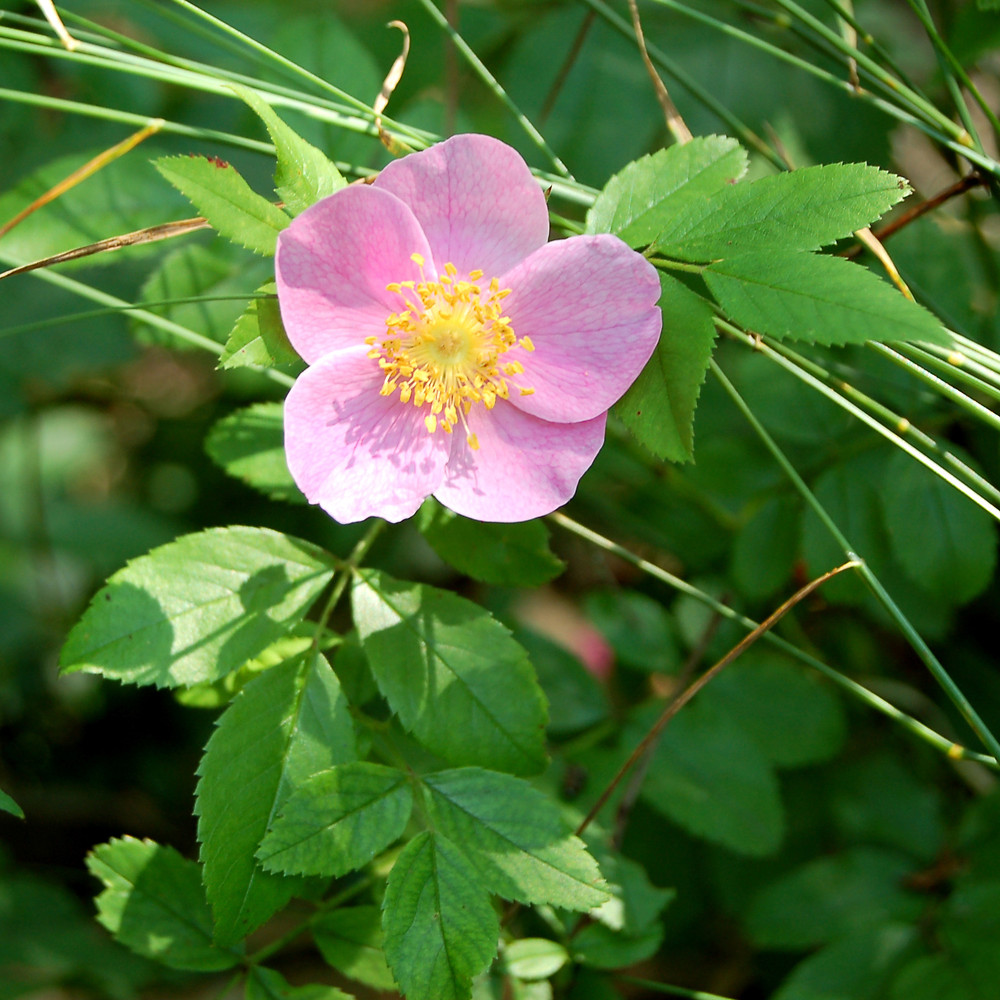
Carolina rose
(Rosa carolina)
Also Known As
Carolina rose, Wild rose, Prairie rose
About This Plant
Rosa carolina is a deciduous shrub that belongs to the Rosaceae family. It has alternate, pinnately compound leaves with 5-7 leaflets that are oval-shaped and serrated. The flowers are pink and have five petals. The fruit is a red hip that is used to make tea and jelly.
Plant Care Instructions
Outdoor Size Range
3-5 feet (0.9-1.5 m) tall and 4-6 feet (1.2-1.8 m) wide
Light Requirements
Carolina rose requires full sun to partial shade. It needs at least 6 hours of sunlight per day to produce abundant flowers.
Humidity Needs
Carolina rose prefers average humidity levels.
Fertilizing Schedule
Fertilize Carolina rose in early spring with a slow-release fertilizer. Apply a balanced fertilizer every 4-6 weeks during the growing season.
Pruning Guidelines
Prune Carolina rose in early spring before new growth appears. Remove dead, diseased, or crossing branches. Cut back the remaining branches by one-third to one-half to encourage new growth and more flowers.
Common Pests and Diseases
Carolina rose is susceptible to aphids, spider mites, and Japanese beetles. It can also be affected by black spot and powdery mildew.
Indoor Size Range
Not suitable for indoor cultivation
Watering Schedule
Water Carolina rose deeply once a week during the growing season. Reduce watering in the fall to help the plant prepare for winter.
Temperature Range
Carolina rose is hardy in USDA zones 3-9. It can tolerate a wide range of temperatures, from -40°F (-40°C) to 100°F (38°C).
Growing Season
Carolina rose blooms in late spring to early summer.
Growing Difficulty Level
Carolina rose is relatively easy to grow. It is a hardy plant that can tolerate a wide range of growing conditions.
USDA Hardiness Zones
3-9
Did You Know?
The hip of the Carolina rose is high in vitamin C and was used by Native Americans to make tea to treat colds and flu.