Special Web Offer - Get 50% OFF!
Grab Your Deal Now
PlantSnap
Plant Care
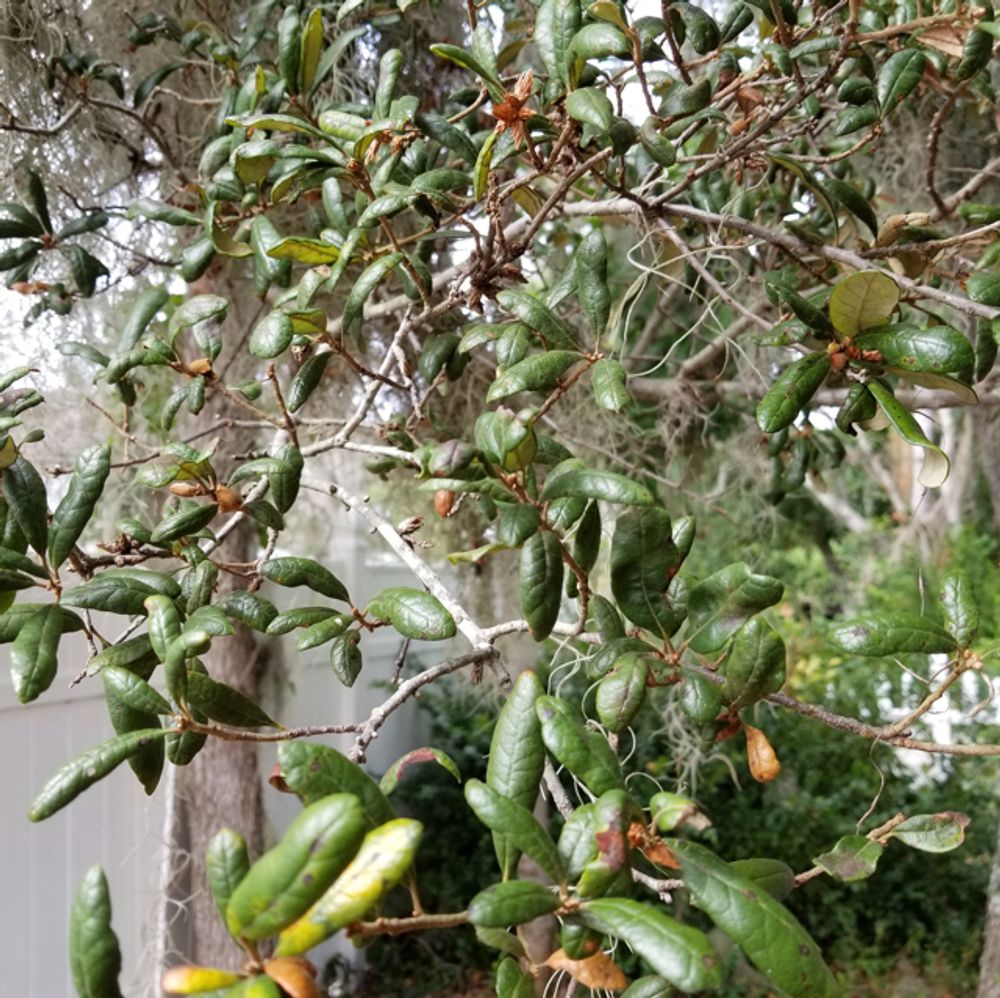
Sand live oak
(Quercus geminata)
Also Known As
Sand live oak, Gumbo limbo oak, Coastal oak
About This Plant
Quercus geminata, commonly known as sand live oak, is a species of evergreen oak tree native to the southeastern United States. It has a dense crown of spreading branches and can grow up to 50 feet (15 meters) tall. The leaves are dark green, leathery, and oblong, with a glossy upper surface and a pale underside. The tree produces small acorns that are an important food source for wildlife.
Plant Care Instructions
Outdoor Size Range
30-50 feet (9-15 meters)
Light Requirements
Sand live oak prefers full sun, but can tolerate partial shade.
Humidity Needs
It prefers low to moderate humidity levels.
Fertilizing Schedule
It does not require regular fertilization, but can benefit from occasional applications of a balanced fertilizer.
Pruning Guidelines
Pruning is not necessary, but can be done to maintain a desired shape or remove dead or damaged branches.
Common Pests and Diseases
Sand live oak is susceptible to oak wilt, a fungal disease that can be fatal. It can also be affected by various insect pests, including oak leafrollers, oak skeletonizers, and oak lace bugs.
Indoor Size Range
Not suitable for indoor cultivation
Watering Schedule
It requires moderate watering and prefers well-drained soil.
Temperature Range
It is a hardy tree that can tolerate a range of temperatures, but it prefers warm climates.
Growing Season
Spring and summer are the best seasons for planting sand live oak.
Growing Difficulty Level
Sand live oak is a relatively easy tree to grow, but it requires a large space to accommodate its size.
USDA Hardiness Zones
7a to 10b
Did You Know?
Sand live oak is an important plant for coastal dune stabilization and is used in beach restoration projects.
