Special Web Offer - Get 50% OFF!
Grab Your Deal Now
PlantSnap
Plant Care
Douglas fir
(Pseudotsuga menziesii)
Also Known As
Douglas fir, Oregon pine, Red fir, Green douglas fir
About This Plant
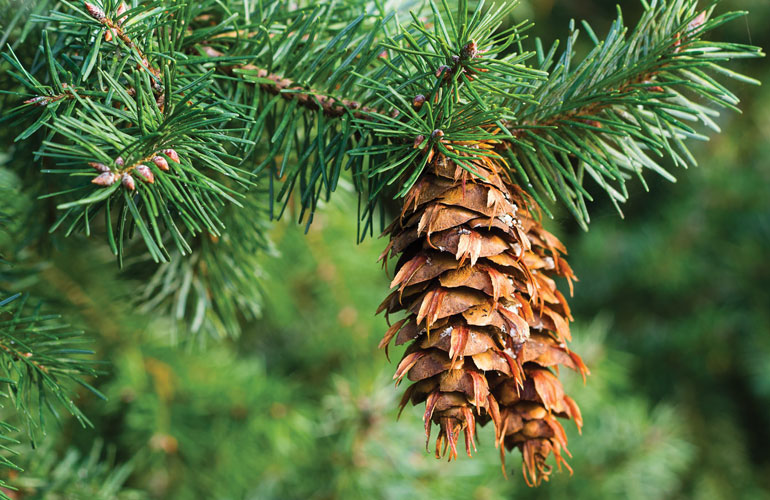
Pseudotsuga menziesii is a large evergreen tree that can grow up to 330 feet (100 meters) tall. It has a conical shape with a straight trunk and a narrow crown. The bark is thick, dark brown, and deeply furrowed. The needles are flat, 0.5 to 1 inch (1.2 to 2.5 cm) long, and arranged in a spiral pattern. The cones are pendulous, 3 to 6 inches (7.6 to 15.2 cm) long, and have woody scales.
Plant Care Instructions
Outdoor Size Range
Height: 50-100 feet (15-30 meters), Spread: 20-25 feet (6-7.6 meters)
Light Requirements
Prefers full sun to partial shade.
Humidity Needs
Prefers moderate to high humidity levels.
Fertilizing Schedule
Requires little to no fertilizer, but can benefit from a slow-release fertilizer applied in early spring.
Pruning Guidelines
Does not require regular pruning, but can benefit from occasional pruning to remove dead or damaged branches.
Common Pests and Diseases
Common pests include bark beetles, adelgids, and spider mites.
Indoor Size Range
Not suitable for indoor cultivation
Watering Schedule
Requires moderate watering, especially during the first few years of growth.
Temperature Range
Can tolerate a wide range of temperatures, from -40°F to 100°F (-40°C to 38°C).
Growing Season
Late spring to early summer.
Growing Difficulty Level
Moderately difficult to grow due to its specific environmental requirements.
USDA Hardiness Zones
USDA hardiness zones 4-7.
Did You Know?
The Douglas Fir is not actually a true fir, but instead belongs to a distinct genus called Pseudotsuga, which means 'false hemlock'.
