Special Web Offer - Get 50% OFF!
Grab Your Deal Now
PlantSnap
Plant Care
Wild petunia
(Petunia integrifolia)
Also Known As
Wild petunia, Trailing petunia, Ground petunia, Compact petunia
About This Plant
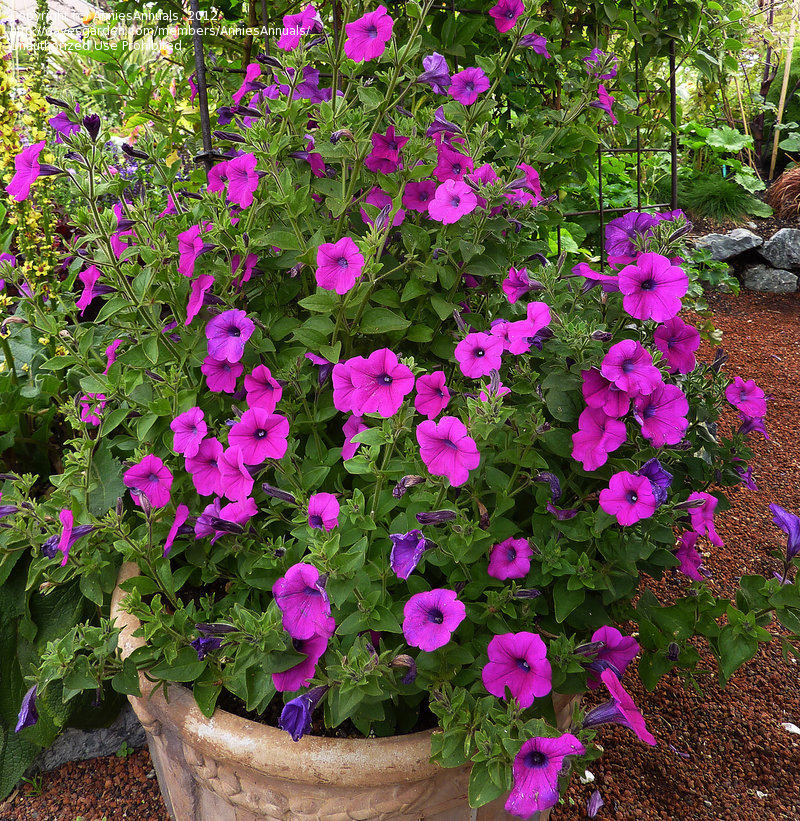
Petunia integrifolia is a species of petunia known for its small, trumpet-shaped purple flowers with yellow centers. The plant has green, lance-shaped leaves and grows in a compact, bushy habit. It is a popular garden plant due to its long blooming period and low maintenance requirements.
Plant Care Instructions
Outdoor Size Range
12-18 inches (30-45 cm)
Light Requirements
Petunias prefer full sun to partial shade. They need at least 6 hours of direct sunlight per day to thrive.
Humidity Needs
Petunias prefer moderate humidity levels but can tolerate dry air.
Fertilizing Schedule
Petunias benefit from regular fertilization with a balanced fertilizer. A slow-release fertilizer can be applied at planting time and every 6-8 weeks thereafter.
Pruning Guidelines
Petunias benefit from deadheading, which involves removing spent flowers to encourage new growth and prolong blooming. They can also be pruned to maintain their shape and size.
Common Pests and Diseases
Common pests of petunias include aphids, spider mites, and whiteflies. Diseases such as powdery mildew and botrytis can also affect the plant.
Indoor Size Range
6-12 inches (15-30 cm)
Watering Schedule
Petunias require regular watering to keep the soil moist but not waterlogged. They are sensitive to drought and may wilt if not watered enough.
Temperature Range
Petunias prefer temperatures between 60-80°F (15-27°C). They are sensitive to frost and should be protected from cold temperatures.
Growing Season
Petunias are annuals and typically bloom from late spring to early fall.
Growing Difficulty Level
Petunias are relatively easy to grow and maintain, making them a popular choice for gardeners of all skill levels.
USDA Hardiness Zones
Petunias are hardy in USDA zones 10-11 but are typically grown as annuals in cooler climates.
Did You Know?
Petunias are named after the French word 'petun', which means 'tobacco', as they were originally thought to be a type of tobacco plant.
