Special Web Offer - Get 50% OFF!
Grab Your Deal Now
PlantSnap
Plant Care
Petunia
(Petunia altiplana)
Also Known As
Petunia, Altiplano petunia, Highland petunia
About This Plant
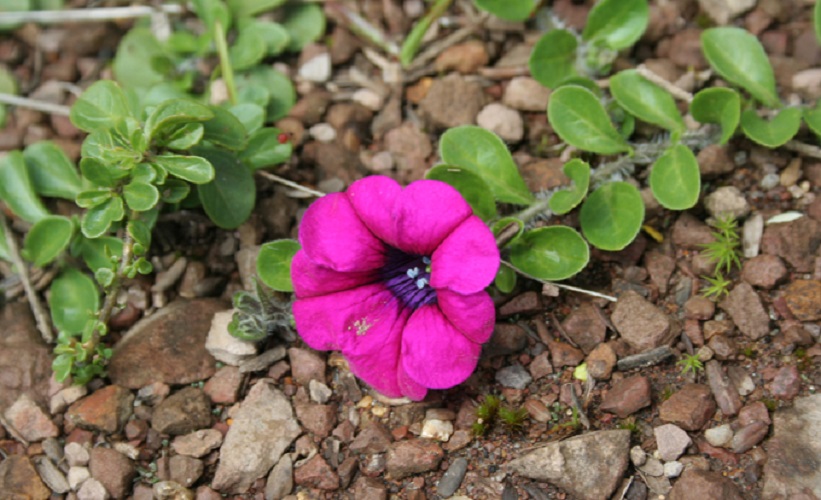
Petunia altiplana is a species of flowering plant in the family Solanaceae, native to Bolivia. It is a perennial herbaceous plant that grows up to 30 cm tall. The leaves are simple, ovate, and up to 5 cm long. The flowers are trumpet-shaped, up to 4 cm in diameter, and vary in color from white to pink to purple.
Plant Care Instructions
Outdoor Size Range
8-12 inches (20-30 cm)
Light Requirements
Petunia altiplana requires full sun to partial shade. In indoor settings, place the plant near a window that receives bright, indirect light.
Humidity Needs
Petunia altiplana prefers moderate humidity levels.
Fertilizing Schedule
Fertilize Petunia altiplana every 2-3 weeks during the growing season with a balanced, water-soluble fertilizer.
Pruning Guidelines
Prune Petunia altiplana regularly to encourage bushy growth and promote flowering. Pinch back the tips of the stems and remove any dead or yellowing leaves.
Common Pests and Diseases
Common pests that can affect Petunia altiplana include aphids, spider mites, and whiteflies. Diseases that can affect this plant include powdery mildew and botrytis blight.
Indoor Size Range
8-12 inches (20-30 cm)
Watering Schedule
Water the plant when the top inch of soil feels dry to the touch. Avoid overwatering, as this can lead to root rot.
Temperature Range
Petunia altiplana can tolerate a wide range of temperatures, from 50-85°F (10-29°C). However, it prefers temperatures between 60-75°F (15-24°C).
Growing Season
Petunia altiplana blooms from late spring to early fall.
Growing Difficulty Level
Petunia altiplana is relatively easy to grow.
USDA Hardiness Zones
Petunia altiplana is hardy in USDA zones 9-11.
Did You Know?
Petunia altiplana is one of the few petunia species that is native to South America, where it grows in the high Andes mountains at elevations of up to 4,600 meters (15,000 feet) above sea level.
