Special Web Offer - Get 50% OFF!
Grab Your Deal Now
PlantSnap
Plant Care
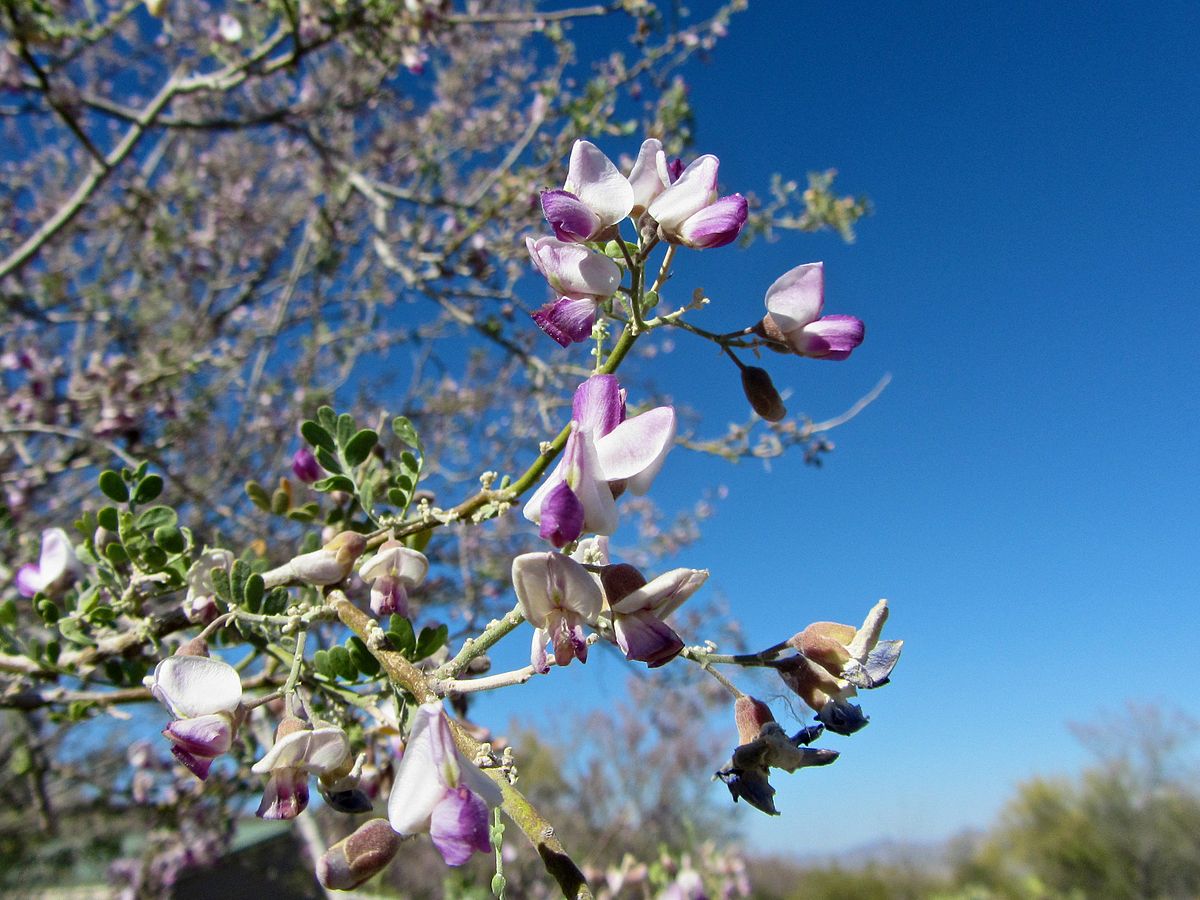
Desert ironwood
(Olneya tesota)
Also Known As
Desert ironwood, Ironwood, Olneya, Mesquite
About This Plant
Olneya tesota is a slow-growing, drought-deciduous tree that can reach up to 40 feet (12 meters) tall and 3 feet (0.9 meters) in diameter. It has a thick, grayish-brown bark that is deeply furrowed and a rounded crown. The leaves are small, pinnately compound, and composed of 7-15 leaflets. The flowers are showy, pinkish-purple, and appear in clusters in the spring. The fruit is a long, flat pod that contains many small seeds.
Plant Care Instructions
Outdoor Size Range
20-40 feet (6-12 meters) tall and 10-20 feet (3-6 meters) wide
Light Requirements
Olneya tesota prefers full sun and can tolerate partial shade.
Humidity Needs
Olneya tesota does not have specific humidity requirements.
Fertilizing Schedule
This plant does not require fertilization, but a slow-release fertilizer can be applied in the spring if desired.
Pruning Guidelines
Pruning is not necessary, but can be done to shape the tree or remove dead or damaged branches.
Common Pests and Diseases
Olneya tesota is relatively pest-free, but can be affected by spider mites, scale insects, and borers. These can be controlled with insecticidal soap or horticultural oil.
Indoor Size Range
Not suitable for indoor growth
Watering Schedule
This plant is drought-tolerant and does not require frequent watering. It is important to avoid overwatering, which can lead to root rot.
Temperature Range
This plant is adapted to hot, dry climates and can tolerate high temperatures. It is not cold-hardy and cannot tolerate frost.
Growing Season
Olneya tesota grows best in the spring and fall, and is dormant during the summer months.
Growing Difficulty Level
Olneya tesota is a slow-growing tree that is adapted to hot, dry climates. It can be difficult to grow in areas with cold winters or high humidity.
USDA Hardiness Zones
Olneya tesota is hardy in USDA zones 9-11.
Did You Know?
The wood of Olneya tesota is one of the densest and hardest of any tree in North America, and is prized for its strength and durability. It is so dense that it sinks in water and was used by Native Americans and early settlers to make tools and weapons.