Special Web Offer - Get 50% OFF!
Grab Your Deal Now
PlantSnap
Plant Care
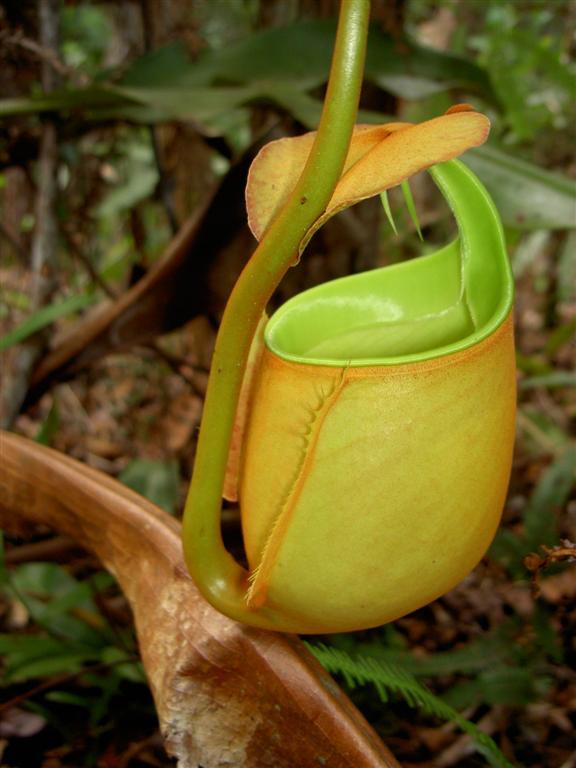
Fanged pitcher-plant
(Nepenthes bicalcarata)
Also Known As
Fanged pitcher-plant, Monkey cup, Screw pine, Pitcher plant
About This Plant
Nepenthes bicalcarata is a carnivorous pitcher plant species native to Borneo. It is known for its unique two-pronged appendages that grow from the base of its pitchers, which are used to trap insects. The plant has a greenish-yellow color and can grow up to 30 cm in height.
Plant Care Instructions
Outdoor Size Range
24-36 inches (60-90 cm)
Light Requirements
Nepenthes bicalcarata prefers bright, indirect light. It should not be exposed to direct sunlight for extended periods of time.
Humidity Needs
Nepenthes bicalcarata requires high humidity levels, ideally between 70-80%. It is recommended to use a humidifier or place the plant on a tray filled with water and pebbles to increase humidity.
Fertilizing Schedule
Nepenthes bicalcarata requires a nutrient-poor soil, as it obtains most of its nutrients from insects. Fertilizer should be used sparingly, if at all.
Pruning Guidelines
Pruning is not necessary for Nepenthes bicalcarata. However, dead pitchers should be removed to prevent the spread of disease.
Common Pests and Diseases
Common pests for Nepenthes bicalcarata include aphids, spider mites, and mealybugs. Diseases that can affect the plant include root rot and fungal infections.
Indoor Size Range
12-18 inches (30-45 cm)
Watering Schedule
The plant should be kept moist at all times. It is recommended to use distilled or rainwater, as tap water may contain minerals that can harm the plant.
Temperature Range
The plant thrives in warm temperatures between 20-30°C (68-86°F). It should not be exposed to temperatures below 10°C (50°F).
Growing Season
Nepenthes bicalcarata can be grown year-round in a suitable environment.
Growing Difficulty Level
Nepenthes bicalcarata is considered moderately difficult to grow, as it requires specific growing conditions and can be sensitive to changes in environment.
USDA Hardiness Zones
Nepenthes bicalcarata is not suitable for outdoor cultivation in the United States, as it requires tropical or subtropical conditions.
Did You Know?
Nepenthes bicalcarata is one of the few carnivorous plants that can digest vertebrates, such as rats and lizards.
