Special Web Offer - Get 50% OFF!
Grab Your Deal Now
PlantSnap
Plant Care
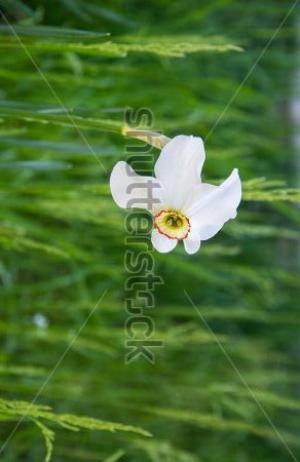
Poet's daffodil
(Narcissus poeticus poeticus)
Also Known As
Poet's daffodil, Poet's narcissus, Pheasant's eye, Holy narcissus
About This Plant
Narcissus poeticus poeticus is a species of flowering plant in the Amaryllidaceae family. It is a perennial herbaceous bulbous geophyte that grows up to 40 cm tall. The plant has narrow, strap-like leaves and a solitary flower on a stem that is surrounded by a whorl of bracts.
Plant Care Instructions
Outdoor Size Range
12-24 inches (30-60 cm)
Light Requirements
Poet's Narcissus prefers full sun to partial shade. It can tolerate some shade, but too much shade will result in fewer flowers.
Humidity Needs
Poet's Narcissus does not have any specific humidity requirements. It can tolerate normal indoor or outdoor humidity levels.
Fertilizing Schedule
The plant does not require much fertilizer. A balanced fertilizer can be applied in early spring and again after the flowers have bloomed.
Pruning Guidelines
After the flowers have bloomed, the plant should be allowed to die back naturally. The leaves should not be cut back until they have turned yellow and withered.
Common Pests and Diseases
Poet's Narcissus is not usually affected by pests or diseases. However, it can be susceptible to bulb rot if the soil is too wet.
Indoor Size Range
12-24 inches (30-60 cm)
Watering Schedule
The plant requires well-draining soil and regular watering. The soil should be kept moist but not waterlogged. Overwatering can cause the bulbs to rot.
Temperature Range
The plant prefers cool temperatures between 40-60°F (4-16°C). It can tolerate slightly higher temperatures, but too much heat can cause the flowers to wilt.
Growing Season
Poet's Narcissus blooms in late spring to early summer.
Growing Difficulty Level
Poet's Narcissus is relatively easy to grow and care for. It is a good choice for beginner gardeners.
USDA Hardiness Zones
Poet's Narcissus is hardy in USDA zones 4-8.
Did You Know?
Poet's Narcissus is also known as Pheasant's Eye due to the small red spot at the base of its white petals, which resembles the eye of a pheasant.
