Special Web Offer - Get 50% OFF!
Grab Your Deal Now
PlantSnap
Plant Care
Osage orange
(Maclura pomifera)
Also Known As
Osage orange, Bodark, Hedge apple, Yellow wood, Mock orange
About This Plant
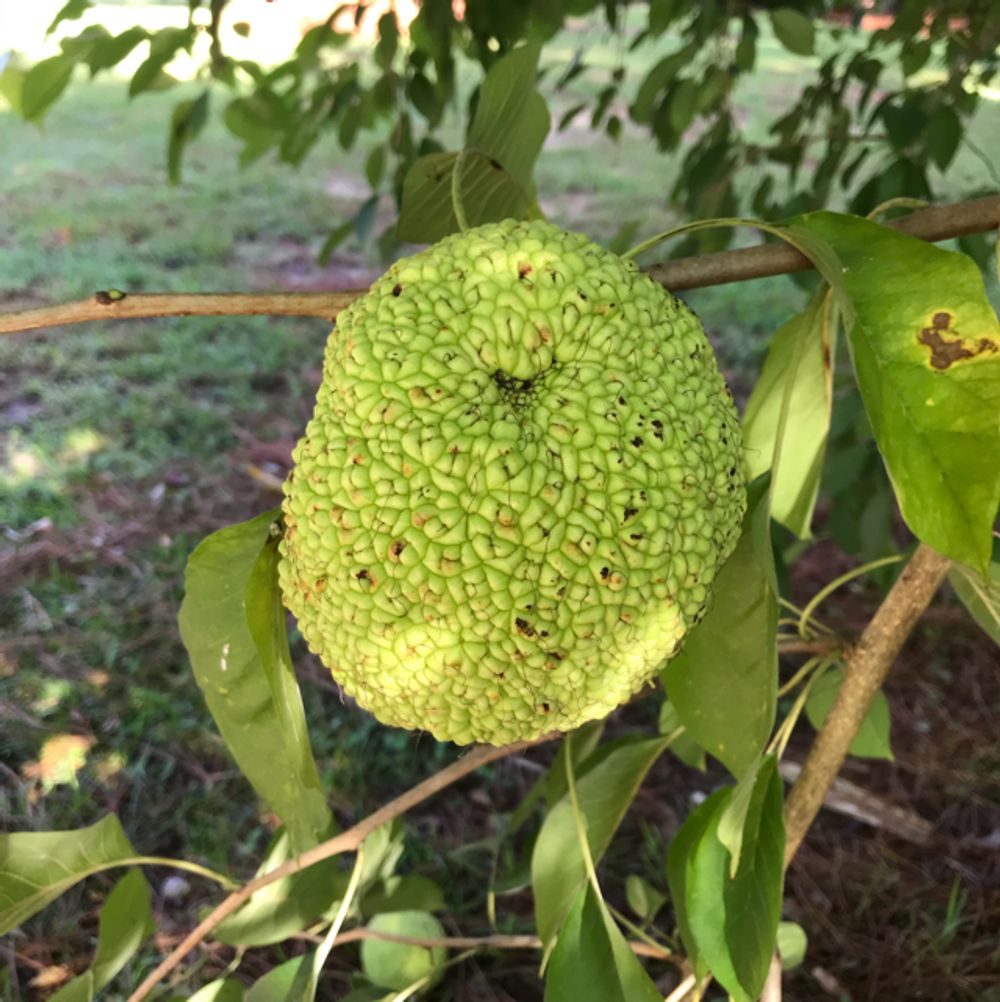
Maclura pomifera, commonly known as Osage orange, is a medium-sized deciduous tree that is native to North America. The tree has a rounded shape and produces a milky sap when cut. It has a rough, deeply furrowed bark and large thorns on its branches. The leaves are dark green, glossy, and have a leathery texture. The tree produces a large, inedible fruit that resembles a brain and is often used for decorative purposes.
Plant Care Instructions
Outdoor Size Range
40-60 feet (12-18 meters) tall, 30-40 feet (9-12 meters) wide
Light Requirements
Osage orange prefers full sun to partial shade, but can tolerate a wide range of light conditions.
Humidity Needs
Osage orange is adaptable to a wide range of humidity levels and does not require any special care in this regard.
Fertilizing Schedule
Osage orange does not require regular fertilization, but can benefit from a balanced fertilizer application in the spring.
Pruning Guidelines
Pruning is not necessary for Osage orange, but it can be pruned to shape or remove dead or damaged branches.
Common Pests and Diseases
Osage orange is relatively pest-free, but can be susceptible to fungal diseases such as root rot and leaf spot.
Indoor Size Range
N/A
Watering Schedule
Osage orange is drought-tolerant and does not require frequent watering. It prefers well-drained soil and should be watered deeply once a week during dry periods.
Temperature Range
Osage orange is hardy in USDA zones 4-9 and can tolerate a wide range of temperatures.
Growing Season
Osage orange grows from spring to fall, with new growth appearing in the spring and the fruit appearing in the fall.
Growing Difficulty Level
Osage orange is a relatively easy tree to grow and maintain.
USDA Hardiness Zones
4-9
Did You Know?
The wood of the Osage orange tree is extremely dense and was historically used by Native Americans for making bows. It is still used today for making archery bows and other wooden items.
