Special Web Offer - Get 50% OFF!
Grab Your Deal Now
PlantSnap
Plant Care
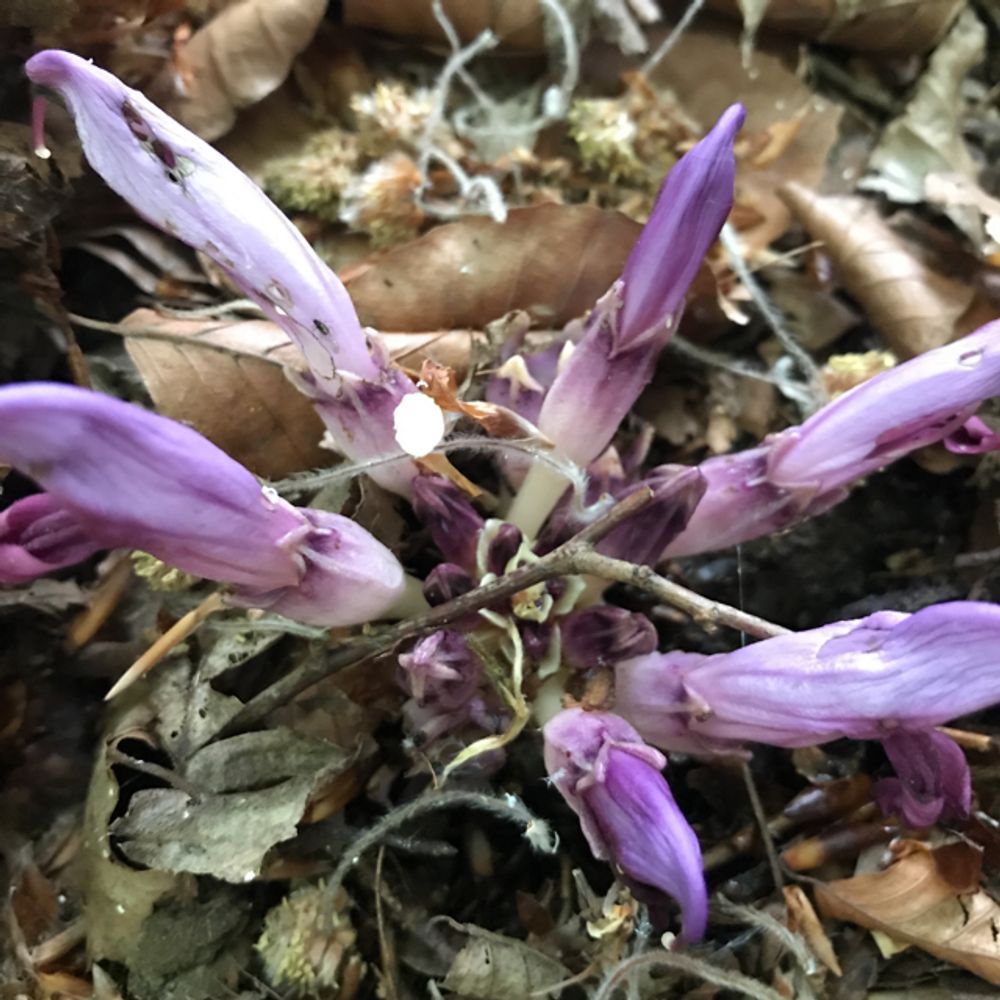
Purple toothwort
(Lathraea clandestina)
Also Known As
Purple toothwort, Common broomrape, Lathraea, Broadleaf broomrape
About This Plant
Lathraea clandestina is a parasitic plant species that lacks chlorophyll and obtains its nutrients from the roots of other plants. It has a short stem with fleshy scales and produces clusters of pink or purple flowers in the spring.
Plant Care Instructions
Outdoor Size Range
Height: 6-12 inches (15-30 cm), Spread: 12-18 inches (30-45 cm)
Light Requirements
Lathraea clandestina prefers partial to full shade conditions and should not be exposed to direct sunlight.
Humidity Needs
Lathraea clandestina prefers moderate to high humidity levels.
Fertilizing Schedule
Lathraea clandestina does not require fertilization as it obtains its nutrients from the roots of other plants.
Pruning Guidelines
Pruning is not necessary for this plant species.
Common Pests and Diseases
Lathraea clandestina is not commonly affected by pests or diseases.
Indoor Size Range
Not suitable for indoor growing
Watering Schedule
This plant species requires consistently moist soil, but not waterlogged. Watering should be done regularly, especially during dry periods.
Temperature Range
This plant species prefers cool to moderate temperatures and can tolerate temperatures as low as 20°F (-6°C).
Growing Season
Lathraea clandestina typically grows in the spring and goes dormant in the summer.
Growing Difficulty Level
Lathraea clandestina is considered difficult to grow due to its parasitic nature and specific growing requirements.
USDA Hardiness Zones
Lathraea clandestina is hardy in USDA zones 5-9.
Did You Know?
Lathraea clandestina is named after the Greek word 'lathraios' which means 'secret' or 'hidden', referring to its underground parasitic growth habit.
