Special Web Offer - Get 50% OFF!
Grab Your Deal Now
PlantSnap
Plant Care
Silver joey
(Johannesteijsmannia magnifica)
Also Known As
Silver joey, Magnificent johannesteijsmannia, Palm of the philippines
About This Plant
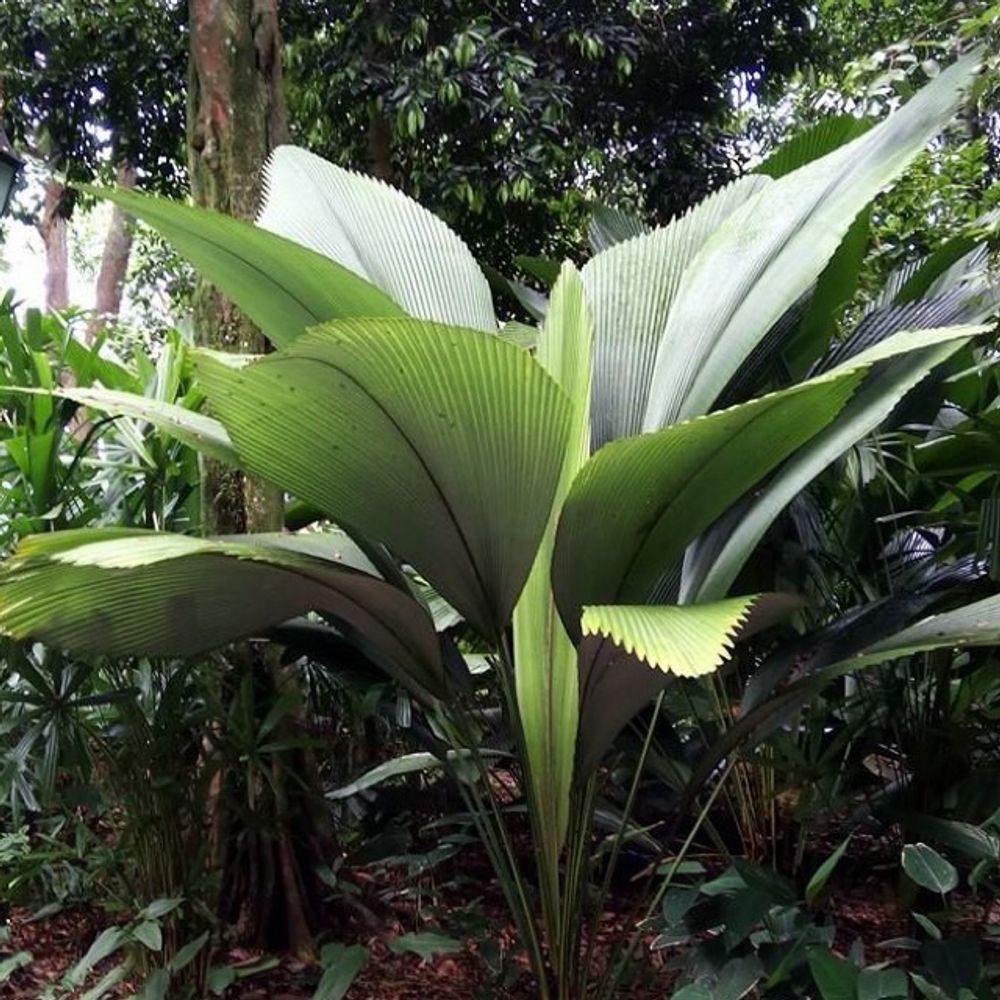
Johannesteijsmannia magnifica is a palm species native to the rainforests of Borneo. It is a slow-growing and solitary palm that can reach up to 15 meters (49 feet) in height. The trunk is covered in dark brown fibers and the leaves are large and fan-shaped, with a bright green color.
Plant Care Instructions
Outdoor Size Range
15-20 feet (457-609 cm)
Light Requirements
Johannesteijsmannia magnifica prefers bright, indirect light. Direct sunlight can burn its leaves.
Humidity Needs
This palm thrives in high humidity environments, so it is recommended to mist the leaves regularly or place a humidifier nearby.
Fertilizing Schedule
Fertilize every 2-3 months during the growing season with a balanced fertilizer. Do not fertilize during the winter months.
Pruning Guidelines
Prune dead or yellowing leaves as needed. Do not prune the top of the palm as it can damage the growing point.
Common Pests and Diseases
Common pests include spider mites and mealybugs. Diseases such as root rot can occur if the soil is too wet.
Indoor Size Range
6-10 feet (182-305 cm)
Watering Schedule
The soil should be kept moist, but not waterlogged. Watering should be reduced during the winter months.
Temperature Range
Johannesteijsmannia magnifica prefers temperatures between 18-27°C (65-80°F). It cannot tolerate frost or temperatures below 10°C (50°F).
Growing Season
Johannesteijsmannia magnifica can be grown year-round, but growth may slow down during the winter months.
Growing Difficulty Level
Johannesteijsmannia magnifica is considered to be moderately difficult to grow. It requires high humidity and specific temperature and light conditions.
USDA Hardiness Zones
Johannesteijsmannia magnifica is not frost-tolerant and is suitable for USDA hardiness zones 10-11.
Did You Know?
Johannesteijsmannia magnifica is named after Johannes Elias Teijsmann, a Dutch botanist who worked extensively in Indonesia during the 19th century.
