Special Web Offer - Get 50% OFF!
Grab Your Deal Now
PlantSnap
Plant Care
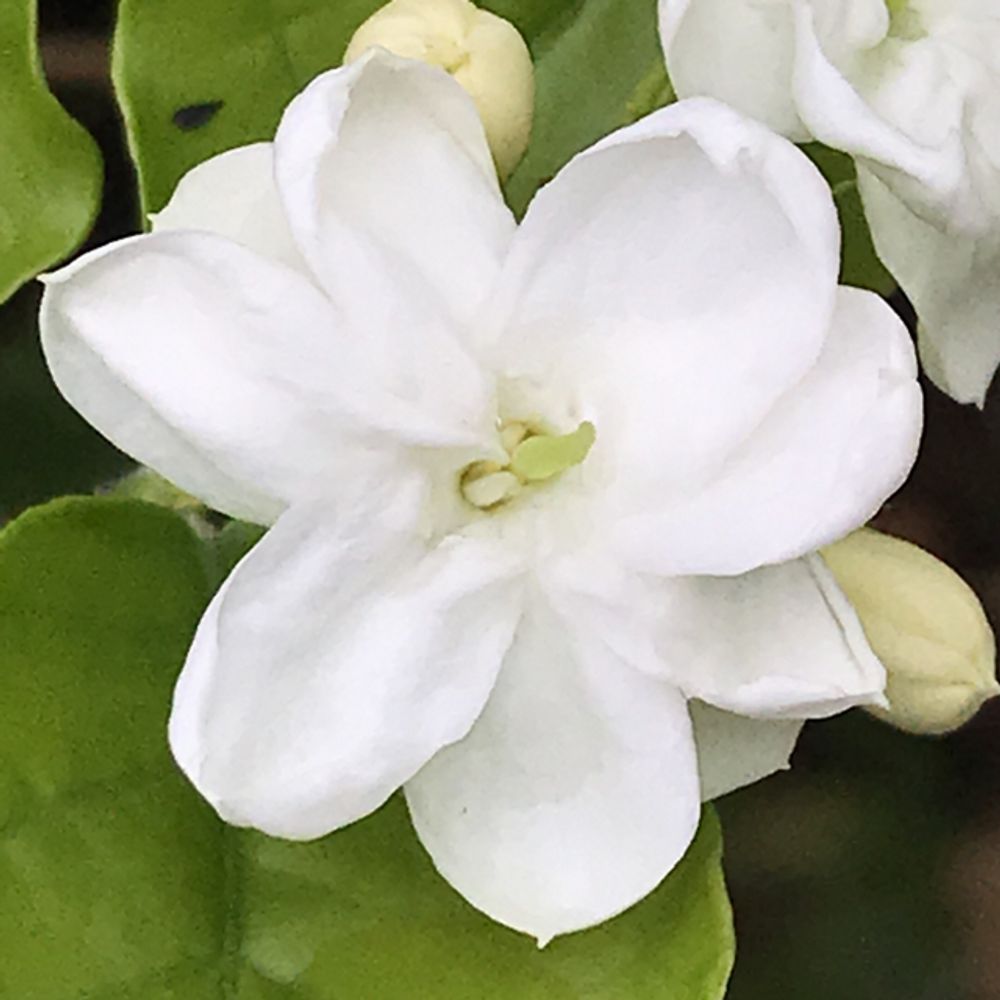
Arabian jasmine
(Jasmine sambac)
Also Known As
Arabian jasmine, Sambac jasmine, Sampaguita
About This Plant
Jasmine sambac is a species of flowering plant in the family Oleaceae. It is an evergreen shrub or vine with shiny, dark green leaves and fragrant white flowers. The flowers are used in perfumes and teas.
Plant Care Instructions
Outdoor Size Range
3-6 feet (0.9-1.8 meters)
Light Requirements
Jasmine sambac requires full sun to partial shade. It needs at least 4-6 hours of direct sunlight per day.
Humidity Needs
Jasmine sambac prefers high humidity levels. Mist the leaves regularly or place a humidifier nearby.
Fertilizing Schedule
Fertilize Jasmine sambac every 2-3 weeks during the growing season with a balanced fertilizer. Reduce fertilizer in winter.
Pruning Guidelines
Prune Jasmine sambac after flowering to maintain its shape and encourage new growth. Pinch back the tips of the branches to promote bushiness.
Common Pests and Diseases
Common pests for Jasmine sambac include aphids, mealybugs, and spider mites. Diseases include leaf spot and powdery mildew.
Indoor Size Range
12-24 inches (30-60 cm)
Watering Schedule
Water Jasmine sambac regularly, keeping the soil moist but not waterlogged. It prefers well-draining soil.
Temperature Range
Jasmine sambac prefers warm temperatures between 60-75°F (16-24°C). It is not frost tolerant.
Growing Season
Jasmine sambac can be grown year-round in warm climates. In cooler climates, it can be grown outdoors in the summer and indoors during the winter.
Growing Difficulty Level
Jasmine sambac is moderately difficult to grow. It requires specific light, humidity, and temperature conditions, and is prone to pests and diseases.
USDA Hardiness Zones
Jasmine sambac is hardy in USDA zones 9-11.
Did You Know?
Jasmine sambac is the national flower of the Philippines and Indonesia, where it is known as Sampaguita and Melati, respectively.
