Special Web Offer - Get 50% OFF!
Grab Your Deal Now
PlantSnap
Plant Care
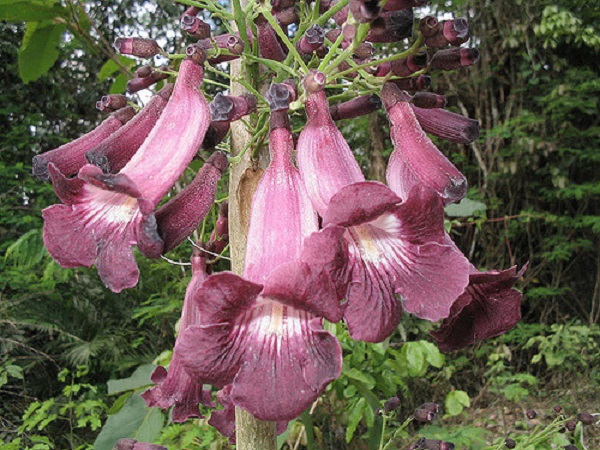
Purple trumpet tree
(Jacaranda glabra)
Also Known As
Purple trumpet tree, Blue jacaranda, Bignonia, Palo de lluvia, Mister crocodile, Jacaranda
About This Plant
Jacaranda glabra is a deciduous tree that grows up to 20-30 meters tall with a spread of 10-20 meters. It has a broad, spreading crown and a trunk diameter of up to 2 meters. The bark is grey-brown and smooth when young, becoming rough and fissured with age. The leaves are bipinnate, up to 45 cm long, with 10-20 pairs of pinnae, each with 20-50 pairs of small leaflets. The flowers are blue-purple, up to 5 cm long, and borne in large panicles up to 50 cm long. The fruit is a capsule up to 5 cm long, containing numerous small seeds.
Plant Care Instructions
Outdoor Size Range
60 - 80 feet (18 - 24 meters)
Light Requirements
Blue jacaranda prefers full sun but can tolerate partial shade.
Humidity Needs
The plant prefers moderate humidity levels, but it can tolerate low humidity.
Fertilizing Schedule
Fertilize the plant once a month during the growing season with a balanced fertilizer. Avoid fertilizing during the winter months.
Pruning Guidelines
Prune the plant in late winter or early spring before new growth appears. Remove any dead, damaged, or diseased branches. Shape the tree by removing any crossing or rubbing branches.
Common Pests and Diseases
Blue jacaranda is generally pest and disease-free. However, it may be susceptible to fungal diseases, such as root rot, if overwatered.
Indoor Size Range
Not suitable for indoors
Watering Schedule
Water the plant deeply once a week during the growing season, and reduce watering during the winter months. Avoid overwatering as it can cause root rot.
Temperature Range
Blue jacaranda prefers warm temperatures between 65-85°F (18-29°C). It can tolerate temperatures as low as 30°F (-1°C) but may suffer frost damage.
Growing Season
Spring and summer
Growing Difficulty Level
Moderate
USDA Hardiness Zones
9b to 11
Did You Know?
The wood of the blue jacaranda tree is used in South America to make guitars and other musical instruments.