Special Web Offer - Get 50% OFF!
Grab Your Deal Now
PlantSnap
Plant Care
Carobinha
(Jacaranda decurrens)
Also Known As
Carobinha, Brazilian jacaranda, Blue jacaranda, Purple jacaranda
About This Plant
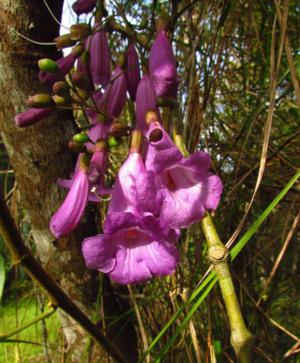
Jacaranda decurrens is a deciduous tree that can grow up to 15-25 meters tall with a spread of 10-15 meters. It has a broad, spreading canopy with a short trunk and smooth, gray bark. The leaves are pinnate and up to 45 cm long, with 11-25 leaflets that are lance-shaped and up to 10 cm long. The flowers are large and showy, with a violet-blue color and a trumpet shape. They bloom in late spring to early summer, usually after the leaves have emerged.
Plant Care Instructions
Outdoor Size Range
15-25 meters (49-82 feet) tall and 10-15 meters (33-49 feet) wide
Light Requirements
Jacaranda decurrens prefers full sun to partial shade. It requires at least 6 hours of direct sunlight per day to thrive.
Humidity Needs
It prefers moderate humidity levels, but can tolerate dry air.
Fertilizing Schedule
Fertilize the plant once a month during the growing season with a balanced fertilizer.
Pruning Guidelines
Prune the plant in late winter or early spring to remove dead or damaged branches and to shape the tree.
Common Pests and Diseases
Common pests include aphids, spider mites, and whiteflies. Diseases such as root rot and leaf spot can also affect the plant.
Indoor Size Range
Not suitable for indoor growth
Watering Schedule
It prefers well-drained soil and moderate watering. Water the plant deeply once a week during the growing season, and reduce watering during the dormant season.
Temperature Range
It can tolerate a wide range of temperatures, from 20-35°C (68-95°F). It is hardy to USDA zones 9-11.
Growing Season
The growing season for Jacaranda decurrens is from late spring to early fall.
Growing Difficulty Level
Jacaranda decurrens is moderately difficult to grow, as it requires specific growing conditions and can be prone to pests and diseases.
USDA Hardiness Zones
USDA hardiness zones 9-11
Did You Know?
The Australian jacaranda is a symbol of spring in many parts of the world, and is particularly associated with the beginning of the academic year in Australia and New Zealand. The University of Sydney is known for its jacaranda trees, which bloom in late October and early November.
