Special Web Offer - Get 50% OFF!
Grab Your Deal Now
PlantSnap
Plant Care
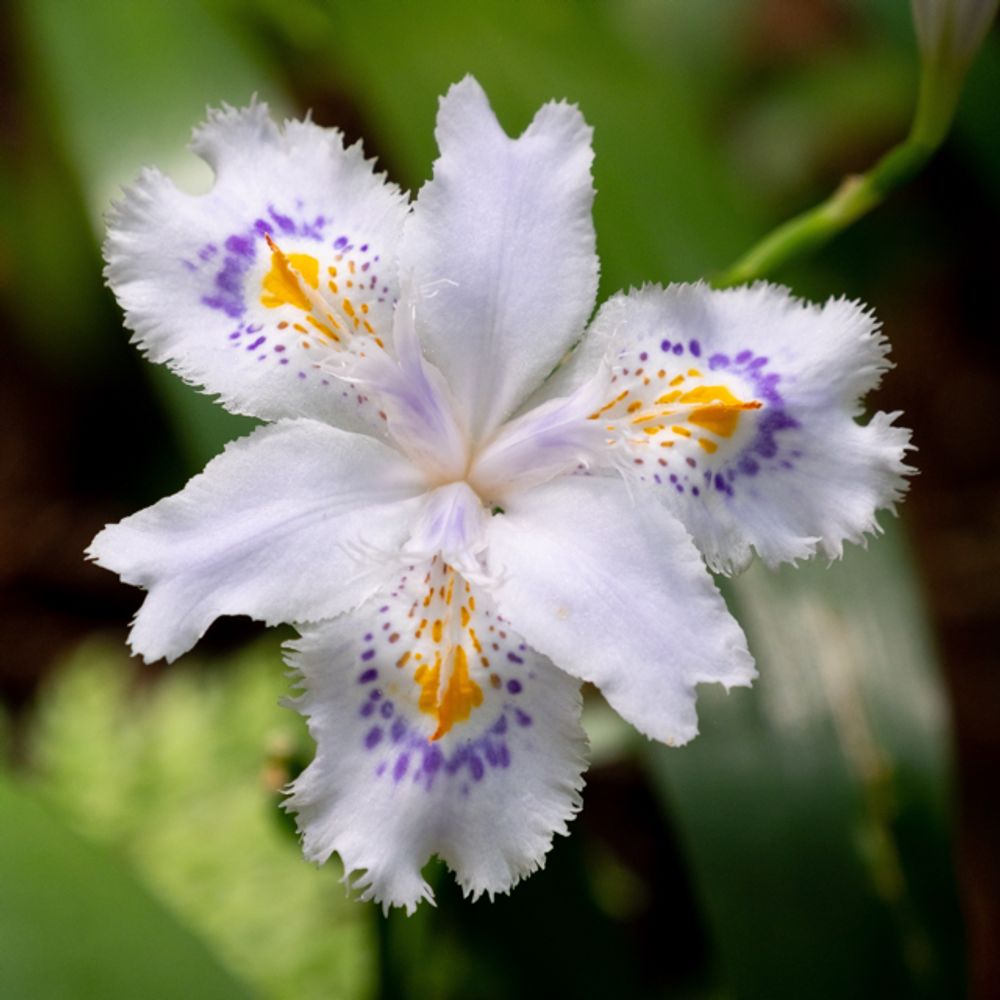
Fringed iris
(Iris japonica)
Also Known As
Fringed iris, Japanese iris, Juno iris, Okubo-kiku
About This Plant
Iris japonica is a species of flowering plant in the family Iridaceae. It is a rhizomatous perennial that grows up to 2-3 feet (60-90 cm) tall and 1-2 feet (30-60 cm) wide. The plant has evergreen foliage and produces clusters of violet-blue or white flowers with yellow markings in the spring and summer.
Plant Care Instructions
Outdoor Size Range
2-3 feet (60-90 cm) tall and 1-2 feet (30-60 cm) wide
Light Requirements
Iris japonica requires full sun to partial shade. It is best to plant it in a location that receives morning sun and afternoon shade.
Humidity Needs
The plant prefers moderate to high humidity levels.
Fertilizing Schedule
The plant benefits from a balanced fertilizer application in the spring and fall.
Pruning Guidelines
The plant should be pruned after flowering to remove dead flowers and foliage.
Common Pests and Diseases
Common pests and diseases for Iris japonica include iris borer, thrips, and fungal leaf spot.
Indoor Size Range
Not suitable for indoor growing
Watering Schedule
The plant requires regular watering during the growing season, but it should not be overwatered. The soil should be moist but well-draining.
Temperature Range
Iris japonica is hardy in USDA zones 6-9 and can tolerate temperatures down to -10°F (-23°C).
Growing Season
The growing season for Iris japonica is from spring to summer.
Growing Difficulty Level
Iris japonica is moderately difficult to grow and requires specific growing conditions.
USDA Hardiness Zones
USDA hardiness zones 6-9
Did You Know?
Iris japonica is also known as the 'fringed iris' due to the fringed edges of its petals.