Special Web Offer - Get 50% OFF!
Grab Your Deal Now
PlantSnap
Plant Care
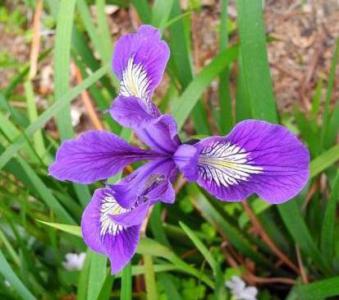
Douglas iris
(Iris douglasiana)
Also Known As
Douglas iris, Pacific coast iris
About This Plant
Iris douglasiana is a species of iris native to the coastal areas of California and Oregon. It is a rhizomatous perennial plant with sword-shaped leaves and showy flowers in shades of blue, purple, and white. The flowers have three large sepals, three smaller petals, and a distinctive yellow or white crest on the falls.
Plant Care Instructions
Outdoor Size Range
12-18 inches (30-45 cm) tall and 12-24 inches (30-60 cm) wide
Light Requirements
Iris douglasiana prefers full sun to partial shade. In hot inland areas, it may benefit from some afternoon shade.
Humidity Needs
This plant does not have any specific humidity requirements.
Fertilizing Schedule
This plant does not require fertilizer, but can benefit from a light application of a balanced fertilizer in the spring.
Pruning Guidelines
Deadhead spent flowers to encourage more blooms. Cut back the foliage in the fall to keep the plant looking tidy.
Common Pests and Diseases
Iris douglasiana is relatively pest and disease-free, but can be susceptible to iris borer and root rot in poorly-drained soil.
Indoor Size Range
N/A
Watering Schedule
This plant prefers moderate watering, allowing the soil to dry out slightly between waterings. It can tolerate some drought once established.
Temperature Range
Iris douglasiana is tolerant of a wide range of temperatures, from 20°F (-6°C) to 100°F (38°C).
Growing Season
Iris douglasiana blooms from late winter to early spring.
Growing Difficulty Level
Iris douglasiana is moderately easy to grow, and can be a good choice for beginner gardeners.
USDA Hardiness Zones
USDA hardiness zones 8-10.
Did You Know?
Iris douglasiana is named after Scottish botanist David Douglas, who collected the first specimens of the plant in California in the 1830s.
