Special Web Offer - Get 50% OFF!
Grab Your Deal Now
PlantSnap
Plant Care
Siebold's stonecrop
(Hylotelephium sieboldii)
Also Known As
Siebold's stonecrop, Stonecrop, Sedum sieboldii, October daphne, Japanese stonecrop
About This Plant
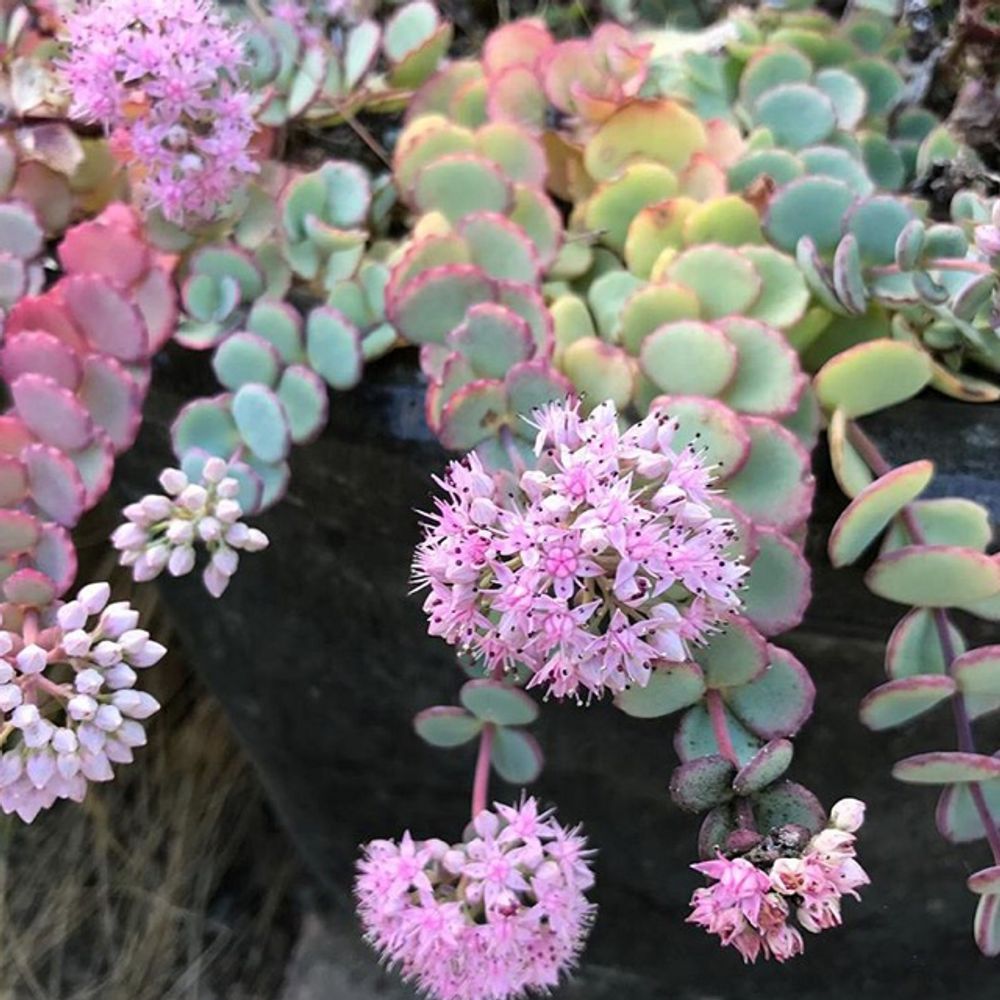
Hylotelephium sieboldii is a herbaceous perennial plant species that belongs to the family Crassulaceae. It has a rosette of blue-green leaves that turn pink in the fall. The plant produces flat-topped clusters of pink flowers that bloom in late summer to early fall.
Plant Care Instructions
Outdoor Size Range
18-24 inches (45-60 cm)
Light Requirements
Hylotelephium sieboldii prefers full sun to partial shade. It can tolerate some shade, but the leaves may become greener and the plant may produce fewer flowers.
Humidity Needs
Hylotelephium sieboldii does not have any specific humidity requirements.
Fertilizing Schedule
Fertilize the plant once a year in the spring with a balanced fertilizer.
Pruning Guidelines
Cut back the stems to the ground in late fall or early spring before new growth appears. This will help to prevent the plant from becoming too leggy and will encourage bushier growth.
Common Pests and Diseases
Hylotelephium sieboldii is generally pest-free, but it may be susceptible to fungal diseases in humid conditions.
Indoor Size Range
8-12 inches (20-30 cm)
Watering Schedule
Water the plant deeply once a week during the growing season. Allow the soil to dry out slightly between waterings. Reduce watering in the fall as the plant prepares for dormancy.
Temperature Range
The plant can tolerate a wide range of temperatures, from -30°F (-34°C) to 100°F (38°C).
Growing Season
The plant blooms in late summer to early fall and goes dormant in the winter.
Growing Difficulty Level
Hylotelephium sieboldii is easy to grow and requires minimal maintenance.
USDA Hardiness Zones
Hylotelephium sieboldii is hardy in USDA zones 4-9.
Did You Know?
Hylotelephium sieboldii is native to Japan and Korea, where it is known as 'yuki-no-shita' or 'under the snow'. The plant gets its name because it blooms in the fall, just as the first snows are beginning to fall.