Special Web Offer - Get 50% OFF!
Grab Your Deal Now
PlantSnap
Plant Care
Barbados lily
(Hippeastrum puniceum)
Also Known As
Barbados lily, Amaryllis, Knight's star lily, Red amaryllis
About This Plant
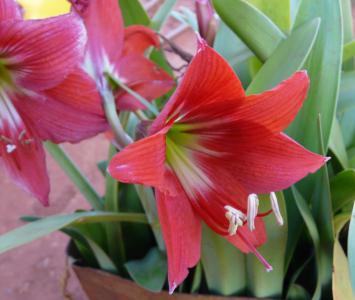
Hippeastrum puniceum is a bulbous perennial plant species that belongs to the Amaryllidaceae family. It is also known as Barbados lily or amaryllis. The plant has narrow, strap-shaped leaves that are about 30-50 cm long and 2-3 cm wide. It produces a tall, leafless scape that carries clusters of 2-12 large, trumpet-shaped flowers that are usually bright red with a white throat. The plant blooms in late winter or early spring and has a sweet fragrance.
Plant Care Instructions
Outdoor Size Range
12-24 inches (30-60 cm)
Light Requirements
Hippeastrum puniceum requires bright, indirect light. It should be kept in a location that receives at least 6 hours of bright, indirect sunlight daily.
Humidity Needs
Hippeastrum puniceum prefers moderate humidity levels. It can tolerate dry air but will benefit from occasional misting.
Fertilizing Schedule
During the growing season, Hippeastrum puniceum should be fertilized every 2-3 weeks with a balanced fertilizer. It is important not to fertilize the plant during the dormant season.
Pruning Guidelines
The plant does not require extensive pruning. However, spent flowers and yellowing leaves should be removed to promote new growth.
Common Pests and Diseases
Common pests for Hippeastrum puniceum include spider mites, mealybugs, and aphids. The plant can also be susceptible to fungal diseases if overwatered.
Indoor Size Range
12-24 inches (30-60 cm)
Watering Schedule
The plant should be watered thoroughly when the top inch of soil feels dry to the touch. It is important not to overwater the plant as it can cause root rot.
Temperature Range
The plant prefers temperatures between 60-75°F (15-24°C). It should be kept away from cold drafts and direct heat sources.
Growing Season
The plant blooms in late winter or early spring.
Growing Difficulty Level
Hippeastrum puniceum is relatively easy to grow and care for. It is a good choice for beginner gardeners.
USDA Hardiness Zones
Hippeastrum puniceum is not frost-hardy and is best grown in USDA hardiness zones 9-11.
Did You Know?
The name Hippeastrum comes from the Greek words 'hippeus,' meaning knight, and 'astron,' meaning star, referring to the star-shaped flowers. Despite its common name, the plant is not native to Barbados but rather to the tropical regions of South America.
