Special Web Offer - Get 50% OFF!
Grab Your Deal Now
PlantSnap
Plant Care
Rose of sharon
(Hibiscus syriacus Amplissimus)
Also Known As
Rose of sharon, Chinese hibiscus, Althea, Hibiscus
About This Plant
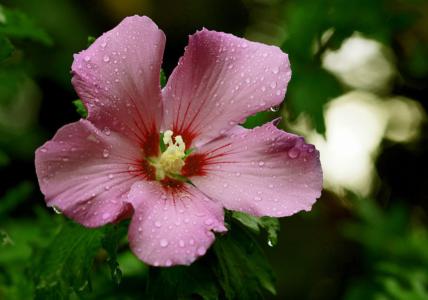
Hibiscus syriacus 'Amplissimus' is a deciduous shrub that can grow up to 10 feet (3 meters) tall and 6 feet (1.8 meters) wide. It has large, showy, lavender-pink flowers with red centers that bloom from mid-summer to early fall. The leaves are green and lobed, and the bark is gray-brown and peels off in strips.
Plant Care Instructions
Outdoor Size Range
6-10 feet (1.8-3 meters) tall and 4-6 feet (1.2-1.8 meters) wide
Light Requirements
Hibiscus syriacus 'Amplissimus' prefers full sun to partial shade. It needs at least 6 hours of direct sunlight a day to bloom properly.
Humidity Needs
This plant can tolerate average humidity levels, but it prefers slightly higher humidity levels. You can increase humidity by misting the leaves or placing a tray of water near the plant.
Fertilizing Schedule
Fertilize in early spring with a balanced, slow-release fertilizer. Repeat every 6-8 weeks during the growing season. Do not fertilize in late summer or fall.
Pruning Guidelines
Prune in late winter or early spring before new growth appears. Remove any dead or damaged branches, and prune to shape the plant. You can also prune lightly after the first bloom to encourage a second bloom.
Common Pests and Diseases
Common pests include aphids, spider mites, and whiteflies. Diseases include leaf spot, rust, and powdery mildew.
Indoor Size Range
Not suitable for indoor growth
Watering Schedule
Keep the soil consistently moist but not waterlogged. Water deeply once a week, or more frequently in hot, dry weather.
Temperature Range
Hibiscus syriacus 'Amplissimus' can tolerate a wide range of temperatures, from -10°F (-23°C) to 100°F (38°C). However, it prefers temperatures between 60°F (15°C) and 90°F (32°C).
Growing Season
The growing season for Hibiscus syriacus 'Amplissimus' is from late spring to early fall.
Growing Difficulty Level
Hibiscus syriacus 'Amplissimus' is moderately difficult to grow. It requires consistent watering, fertilizing, and pruning, and it is susceptible to pests and diseases. However, with proper care, it can be a beautiful addition to any garden.
USDA Hardiness Zones
USDA hardiness zones 5-9
Did You Know?
The Rose of Sharon is not actually a rose, but rather a member of the hibiscus family. It is the national flower of South Korea, where it is known as Mugunghwa.
