Special Web Offer - Get 50% OFF!
Grab Your Deal Now
PlantSnap
Plant Care
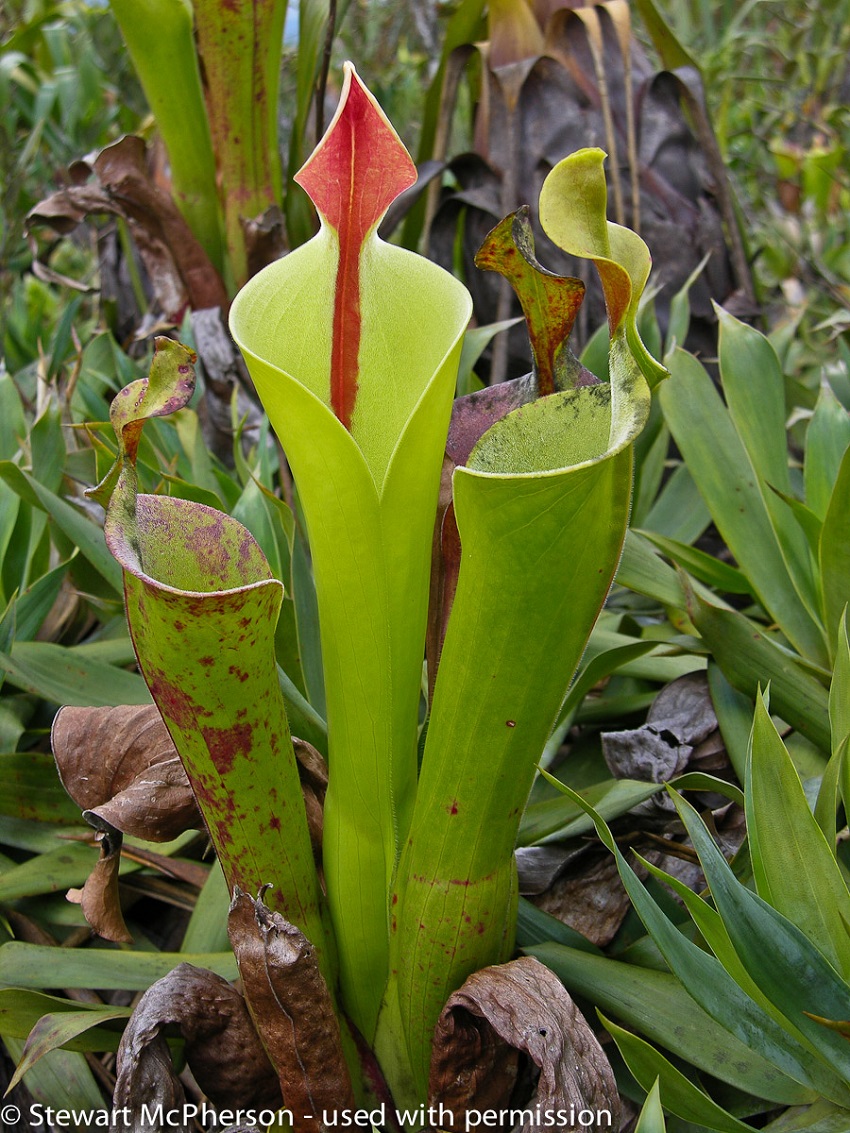
Sun pitcher plant
(Heliamphora tatei neblinae)
Also Known As
Sun pitcher plant, Neblinas sun pitcher, Tate's sun pitcher
About This Plant
Heliamphora tatei neblinae is a carnivorous plant species native to Venezuela. It is a small pitcher plant that grows up to 10 cm tall and has a diameter of 5 cm. Its leaves form a rosette and are modified into pitchers that trap insects. The plant is adapted to grow in nutrient-poor soils and uses insects as a source of nutrients.
Plant Care Instructions
Outdoor Size Range
4-6 inches (10-15 cm)
Light Requirements
Heliamphora tatei neblinae requires bright, indirect light. It should be placed near a window that receives filtered sunlight. Avoid direct sunlight as it can burn the leaves.
Humidity Needs
Heliamphora tatei neblinae requires high humidity levels of at least 70%. It is recommended to place the pot on a tray of pebbles filled with water to increase humidity levels. Alternatively, a humidifier can be used.
Fertilizing Schedule
Heliamphora tatei neblinae does not require fertilizer, as it obtains its nutrients from insects. However, a weak solution of insectivorous plant fertilizer can be applied to the soil once a month during the growing season.
Pruning Guidelines
Heliamphora tatei neblinae does not require pruning, as it has a naturally compact growth habit.
Common Pests and Diseases
Common pests for Heliamphora tatei neblinae include spider mites, aphids, and mealybugs. It is important to inspect the plant regularly and remove any insects that are trapped in the pitchers.
Indoor Size Range
4-6 inches (10-15 cm)
Watering Schedule
The soil of Heliamphora tatei neblinae should be kept moist at all times. It is important to use distilled or rainwater to avoid mineral buildup in the soil. The plant should be watered from the bottom by placing the pot in a tray of water and allowing it to soak up the water for about 30 minutes.
Temperature Range
Heliamphora tatei neblinae prefers cool temperatures between 10-20°C (50-68°F). It should be protected from extreme heat or cold.
Growing Season
Heliamphora tatei neblinae grows year-round.
Growing Difficulty Level
Heliamphora tatei neblinae is considered difficult to grow, as it has specific requirements for light, water, and humidity. It is recommended for experienced carnivorous plant growers.
USDA Hardiness Zones
Heliamphora tatei neblinae is not suitable for outdoor cultivation and does not have a USDA hardiness zone.
Did You Know?
Heliamphora tatei neblinae is named after the Neblina Massif, a mountain range on the border between Venezuela and Brazil where it is found.
