Special Web Offer - Get 50% OFF!
Grab Your Deal Now
PlantSnap
Plant Care
Greater burdock
(Arctium lappa)
Also Known As
Greater burdock, Lappa, Burdock, Gobō
About This Plant
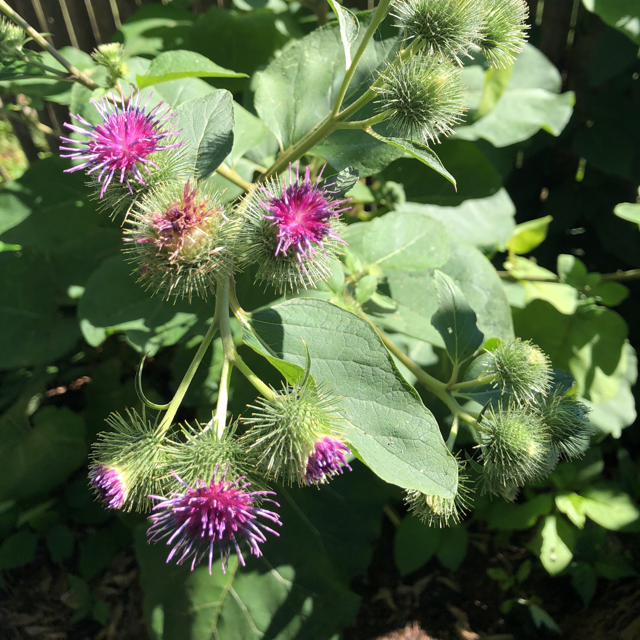
Arctium lappa, commonly known as Greater Burdock, is a biennial plant species that belongs to the Asteraceae family. It can grow up to 2 meters (6.6 feet) tall and has large, heart-shaped leaves that can reach up to 70 cm (28 inches) in length. The plant produces purple flowers that bloom from July to October, followed by round burrs that stick to clothing and animal fur.
Plant Care Instructions
Outdoor Size Range
Up to 2 meters (6.6 feet) tall
Light Requirements
Greater Burdock requires full to partial sun exposure, ideally receiving at least 6 hours of direct sunlight per day.
Humidity Needs
Greater Burdock prefers moderate humidity levels, between 40-60%.
Fertilizing Schedule
The plant does not require regular fertilization, but it can benefit from a balanced fertilizer applied once a month during the growing season.
Pruning Guidelines
Pruning is not necessary, but removing the flower heads before they produce seeds can prevent the plant from spreading too much.
Common Pests and Diseases
Greater Burdock is relatively pest-resistant, but it can be affected by aphids, spider mites, and powdery mildew.
Indoor Size Range
Not suitable for indoor growth
Watering Schedule
The plant requires regular watering, especially during dry periods. However, it is important not to overwater the plant as it can lead to root rot.
Temperature Range
The plant can tolerate a wide range of temperatures, from -20°C (-4°F) to 35°C (95°F). However, it grows best in temperatures between 18-24°C (64-75°F).
Growing Season
Greater Burdock can be grown from seed in the spring or fall. It takes two years for the plant to complete its life cycle, with the first year spent growing leaves and the second year spent producing flowers and seeds.
Growing Difficulty Level
Greater Burdock is relatively easy to grow, but it requires a lot of space due to its size.
USDA Hardiness Zones
Greater Burdock can be grown in USDA hardiness zones 3-9.
Did You Know?
The burrs of Greater Burdock inspired the invention of Velcro. In 1941, Swiss engineer George de Mestral noticed how the burrs stuck to his dog's fur during a walk and examined them under a microscope. He then developed the hook-and-loop fastener system based on the burrs' structure.
