Special Web Offer - Get 50% OFF!
Grab Your Deal Now
PlantSnap
Plant Care
Dragon bones
(Euphorbia lactea)
Also Known As
Dragon bones, African milk barrel, Coral cactus, Milk bush, Mottled spurge
About This Plant
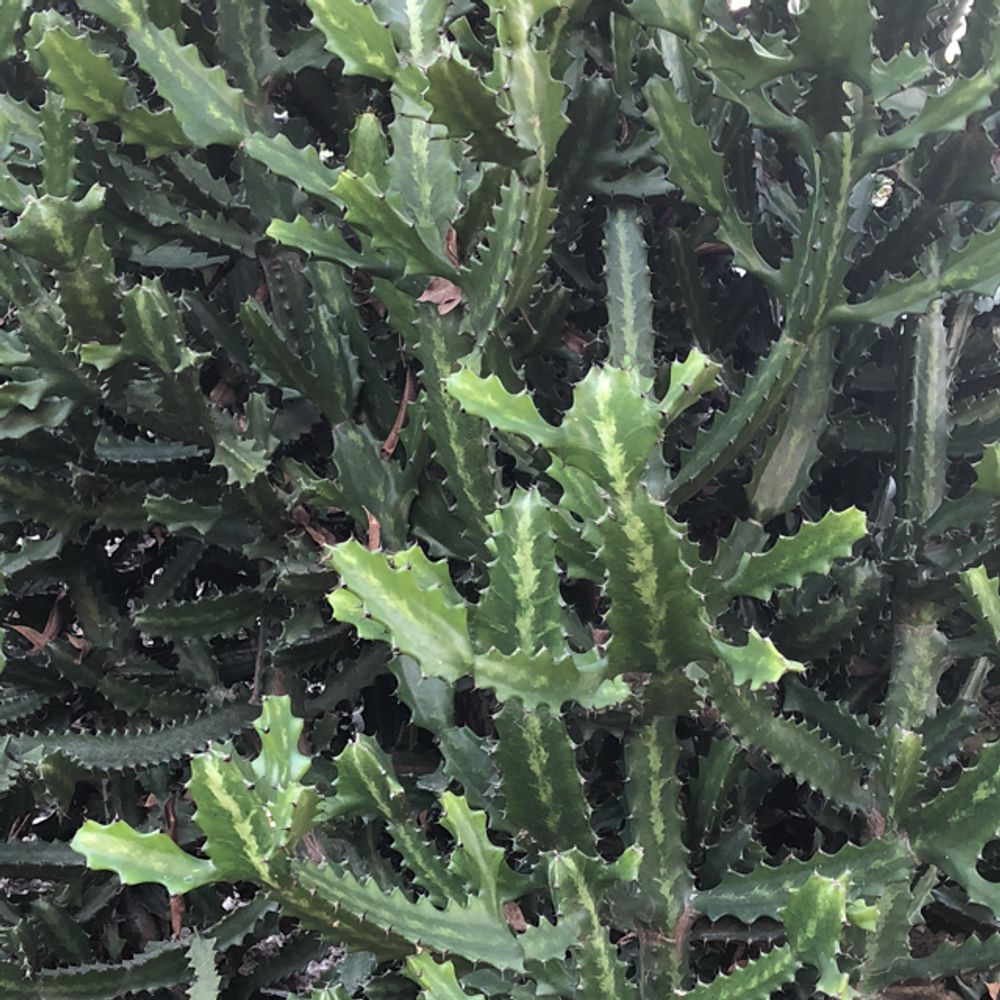
Euphorbia lactea is a succulent plant species native to India and Sri Lanka. It has a unique branching pattern with green stems and white or yellowish-green variegation. The stems are ribbed and have spines on the edges.
Plant Care Instructions
Outdoor Size Range
3-6 feet (90-180 cm)
Light Requirements
Euphorbia lactea prefers bright, indirect light. It can tolerate some direct sunlight, but too much can scorch the leaves.
Humidity Needs
Euphorbia lactea is adapted to dry conditions and does not require high humidity.
Fertilizing Schedule
Fertilize Euphorbia lactea once a month during the growing season (spring and summer) with a balanced fertilizer. Do not fertilize during the winter months.
Pruning Guidelines
Prune Euphorbia lactea in the spring to control its size and shape. Wear gloves and protective clothing when pruning as the sap can cause skin irritation.
Common Pests and Diseases
Euphorbia lactea is susceptible to mealybugs and spider mites. Treat infestations with insecticidal soap or neem oil.
Indoor Size Range
6-12 inches (15-30 cm)
Watering Schedule
Allow the soil to dry out completely before watering. Euphorbia lactea is drought-tolerant and can survive long periods without water.
Temperature Range
Euphorbia lactea prefers warm temperatures between 60-85°F (15-29°C). It can tolerate temperatures as low as 50°F (10°C) but should be protected from frost.
Growing Season
Euphorbia lactea grows actively in the spring and summer months.
Growing Difficulty Level
Euphorbia lactea is relatively easy to grow and care for. It is a good choice for beginners.
USDA Hardiness Zones
Euphorbia lactea is hardy in USDA zones 10-11.
Did You Know?
Euphorbia lactea is commonly used in traditional medicine to treat a variety of ailments, including rheumatism and snake bites.
