Special Web Offer - Get 50% OFF!
Grab Your Deal Now
PlantSnap
Plant Care
Falling stars
(Crocosmia paniculata)
Also Known As
Falling stars, Montbretia, Lucifer, Red hot poker, Canna lily
About This Plant
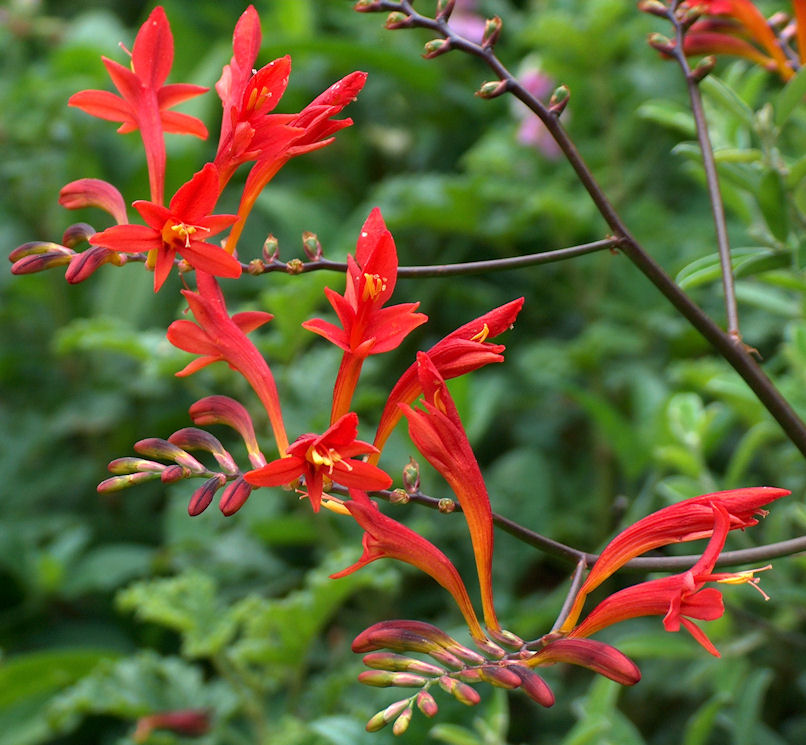
Crocosmia paniculata is a species of flowering plant in the iris family, Iridaceae. It is a herbaceous perennial plant that produces tall spikes of bright orange flowers on arching stems in mid to late summer. The plant grows up to 1.5 meters tall and has long, narrow leaves that are arranged in a fan-like pattern.
Plant Care Instructions
Outdoor Size Range
24-36 inches (60-90 cm) tall and 12-18 inches (30-45 cm) wide
Light Requirements
Crocosmia paniculata requires full sun to grow and flower properly. It can tolerate some shade but will produce fewer flowers in such conditions.
Humidity Needs
Crocosmia paniculata thrives in average to high humidity levels. It can tolerate some dryness, but it will produce fewer flowers in such conditions.
Fertilizing Schedule
The plant benefits from a balanced fertilizer applied in early spring and again in midsummer. Use a slow-release granular fertilizer or a liquid fertilizer diluted to half strength.
Pruning Guidelines
The plant does not require much pruning, but the spent flower spikes should be removed to encourage more blooms. The plant may need to be divided every few years to prevent overcrowding.
Common Pests and Diseases
Crocosmia paniculata is relatively pest and disease-free, but it may be susceptible to aphids and spider mites.
Indoor Size Range
Not suitable for indoor cultivation
Watering Schedule
The plant prefers consistently moist soil, but it should not be overwatered. Watering once a week is usually sufficient, but it may need more frequent watering during hot and dry weather.
Temperature Range
The plant prefers moderate temperatures between 60-75°F (15-24°C). It can tolerate some frost but may die back to the ground in colder climates.
Growing Season
Crocosmia paniculata blooms in mid to late summer and continues to flower into early fall.
Growing Difficulty Level
Crocosmia paniculata is an easy plant to grow and is suitable for beginners. It is tolerant of a wide range of growing conditions and requires minimal maintenance.
USDA Hardiness Zones
Crocosmia paniculata is hardy in USDA zones 6-9.
Did You Know?
Crocosmia paniculata is native to South Africa and is commonly known as Montbretia. It was introduced to Europe in the late 1800s and has since become a popular garden plant worldwide.
