Special Web Offer - Get 50% OFF!
Grab Your Deal Now
PlantSnap
Plant Care
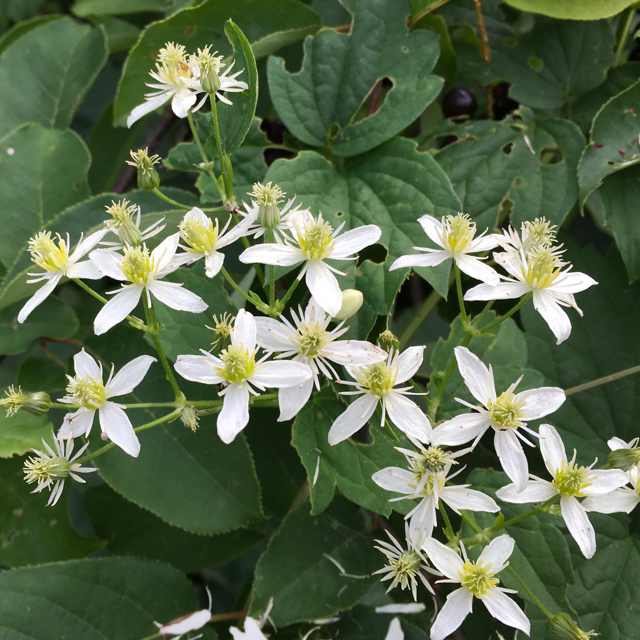
Virgin's bower
(Clematis virginiana)
Also Known As
Virgin's bower, Virginia clematis, Woodbine, Old man's beard
About This Plant
Clematis virginiana is a deciduous, climbing vine that can grow up to 20 feet (6.1 meters) long. It has small, fragrant, white flowers that bloom in late summer and early fall. The plant produces fluffy, silver seed heads that persist through the winter.
Plant Care Instructions
Outdoor Size Range
Up to 20 feet (6.1 meters)
Light Requirements
Clematis virginiana prefers full sun to partial shade. It needs at least six hours of direct sunlight per day to bloom well.
Humidity Needs
Clematis virginiana prefers moderate humidity levels, but can tolerate low humidity. It is important to avoid getting the leaves wet when watering the plant.
Fertilizing Schedule
The plant benefits from a balanced fertilizer applied in early spring before new growth begins. A second application may be made in mid-summer.
Pruning Guidelines
Clematis virginiana blooms on new wood, so it should be pruned in late winter or early spring before new growth begins. Dead or damaged wood should be removed, and the remaining stems should be cut back to 12 to 18 inches (30 to 46 cm) above the ground.
Common Pests and Diseases
Clematis virginiana is relatively pest-free, but can be susceptible to powdery mildew and spider mites.
Indoor Size Range
Not suitable for indoor growth
Watering Schedule
The plant needs regular watering, especially during dry spells. It prefers well-drained soil that is kept consistently moist.
Temperature Range
The plant is hardy in USDA zones 3 to 9 and can tolerate a wide range of temperatures. It can withstand temperatures as low as -40°F (-40°C) and as high as 100°F (38°C).
Growing Season
Clematis virginiana blooms in late summer and early fall.
Growing Difficulty Level
Clematis virginiana is relatively easy to grow, but does require some maintenance, including regular watering, fertilizing, and pruning.
USDA Hardiness Zones
3 to 9
Did You Know?
Clematis virginiana is also known as Devil's Darning Needles because of the long, thin seed heads that resemble sewing needles.
