Special Web Offer - Get 50% OFF!
Grab Your Deal Now
PlantSnap
Plant Care
String of needles
(Ceropegia linearis)
Also Known As
String of needles, String of hearts, Chain of hearts, Rosary vine, Ceropegia
About This Plant
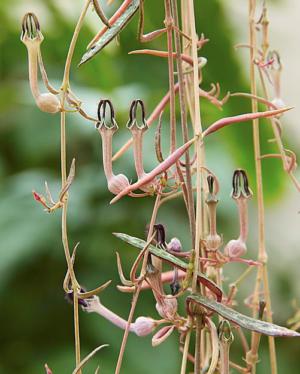
Ceropegia linearis is a species of flowering plant in the genus Ceropegia, native to southern Africa. It is commonly known as String of needles or Chain of hearts. The plant has slender, thread-like stems with small, linear leaves that grow in pairs along the stem. The flowers are tubular and pale pink or purple in color, with a distinctive inflated corolla.
Plant Care Instructions
Outdoor Size Range
12-24 inches (30-60 cm)
Light Requirements
Ceropegia linearis prefers bright, indirect light. Direct sunlight can scorch the leaves.
Humidity Needs
Ceropegia linearis prefers average to high humidity levels. You can increase humidity by placing a tray of water near the plant or by using a humidifier.
Fertilizing Schedule
Fertilize the plant once a month during the growing season (spring and summer) with a balanced liquid fertilizer. Do not fertilize during the winter months.
Pruning Guidelines
Prune the plant in the spring to encourage bushier growth. You can also pinch off the tips of the stems to promote branching.
Common Pests and Diseases
Common pests for Ceropegia linearis include spider mites, mealybugs, and scale insects. Diseases are not common.
Indoor Size Range
6-12 inches (15-30 cm)
Watering Schedule
Water the plant when the soil is dry to the touch, but do not overwater as this can lead to root rot. During the winter months, reduce watering.
Temperature Range
Ceropegia linearis prefers temperatures between 60-75°F (15-24°C). It can tolerate temperatures as low as 50°F (10°C) during the winter months.
Growing Season
Ceropegia linearis grows best during the spring and summer months.
Growing Difficulty Level
Ceropegia linearis is relatively easy to grow and care for. It is a good choice for beginners.
USDA Hardiness Zones
Ceropegia linearis is not frost-tolerant and is best grown indoors. It is not assigned a USDA hardiness zone.
Did You Know?
Ceropegia linearis is also known as 'String of needles' due to its thin, needle-like leaves that grow along its stems.
