Special Web Offer - Get 50% OFF!
Grab Your Deal Now
PlantSnap
Plant Care
Sugarberry
(Celtis laevigata)
Also Known As
Sugarberry, Sugar hackberry, Hackberry, Northern hackberry
About This Plant
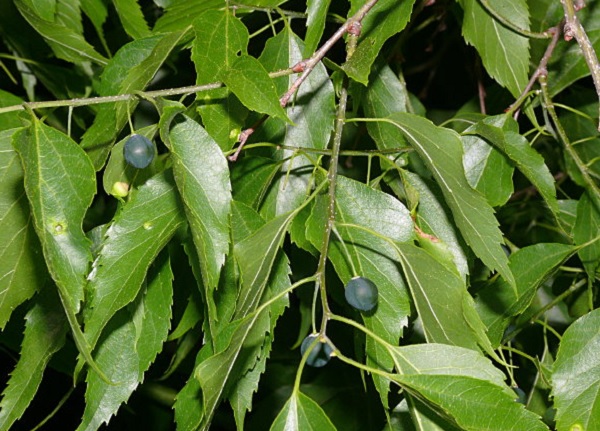
Celtis laevigata is a deciduous tree that can grow up to 80 feet tall with a spread of 50 feet. It has a broad, rounded crown and a straight trunk with a gray-brown bark that becomes scaly with age. The leaves are alternate, simple, and ovate with a serrated margin. The flowers are small and greenish, and the fruit is a small, round, brown drupe that contains a single seed.
Plant Care Instructions
Outdoor Size Range
60-80 feet (18-24 meters) tall and 50 feet (15 meters) wide
Light Requirements
The Sugarberry tree prefers full sun but can tolerate partial shade.
Humidity Needs
It can tolerate low humidity levels.
Fertilizing Schedule
It does not require frequent fertilization, but a slow-release fertilizer can be applied in the spring.
Pruning Guidelines
It requires minimal pruning, but dead or diseased branches should be removed.
Common Pests and Diseases
The Sugarberry tree is relatively pest-free but can be susceptible to borers, scale insects, and leaf spots.
Indoor Size Range
Not suitable for indoor growth
Watering Schedule
It requires moderate watering, especially during the first few years of growth.
Temperature Range
It can tolerate a wide range of temperatures, from -10°F (-23°C) to 110°F (43°C).
Growing Season
The growing season for the Sugarberry tree is from late spring to early fall.
Growing Difficulty Level
The Sugarberry tree is moderately easy to grow.
USDA Hardiness Zones
USDA hardiness zones 6a to 9b.
Did You Know?
The Sugarberry tree is also known as the Hackberry tree, and its wood is used for furniture, flooring, and tool handles.
