Special Web Offer - Get 50% OFF!
Grab Your Deal Now
PlantSnap
Plant Care
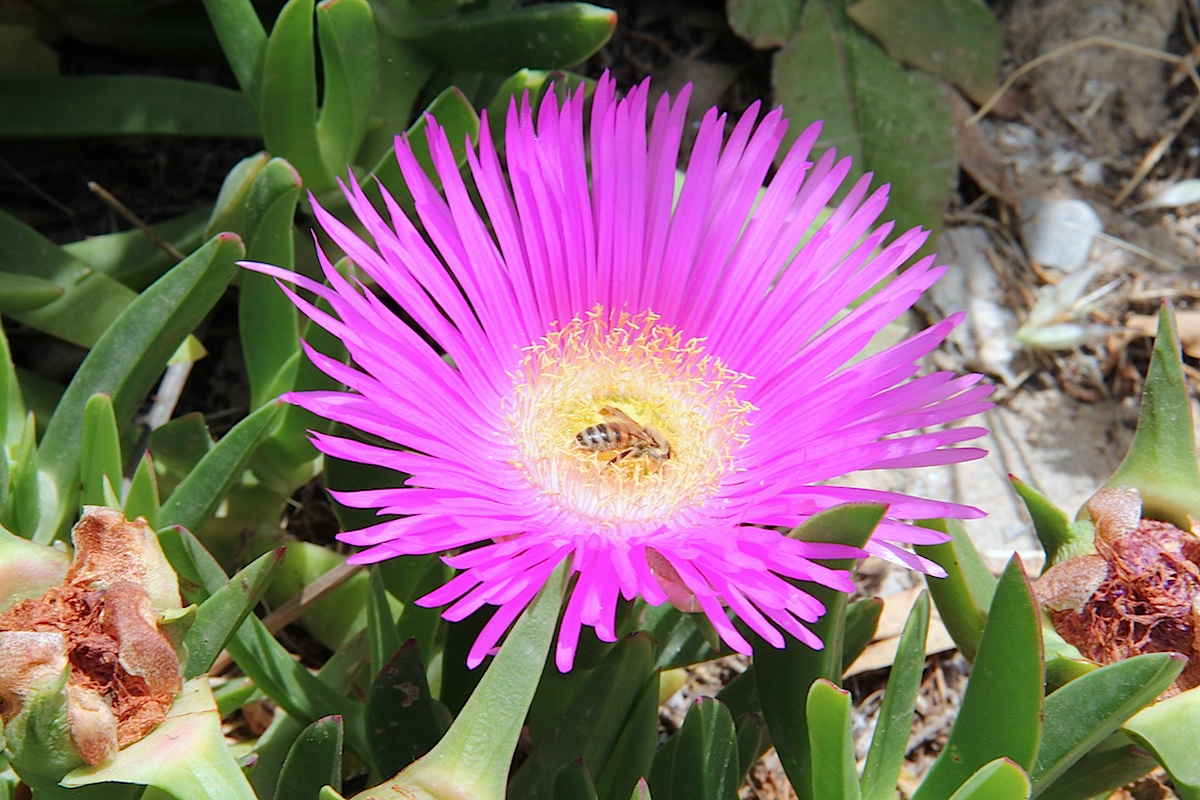
Hottentot-fig
(Carpobrotus acinaciformis)
Also Known As
Hottentot-fig, Ice plant, Hottentot fig, Trailing ice plant
About This Plant
Carpobrotus acinaciformis is a succulent plant species that is native to South Africa. It is a spreading groundcover that grows up to 1 foot (30 cm) tall and up to 6 feet (1.8 m) wide. The leaves are triangular in shape and up to 3 inches (7.6 cm) long. The flowers are yellow and daisy-like, blooming in the summer.
Plant Care Instructions
Outdoor Size Range
Up to 1 foot (30 cm) tall and up to 6 feet (1.8 m) wide
Light Requirements
Carpobrotus acinaciformis requires full sun to partial shade. It is best to place it in a location where it can receive at least 6 hours of direct sunlight per day.
Humidity Needs
This plant does not require high humidity levels and can tolerate dry air.
Fertilizing Schedule
This plant does not require fertilizer, but you can use a balanced fertilizer once a year in the spring if you want to encourage growth.
Pruning Guidelines
Prune Carpobrotus acinaciformis in the spring to remove dead or damaged leaves and to control its spread.
Common Pests and Diseases
Carpobrotus acinaciformis is generally pest-free, but it can be susceptible to root rot if the soil is too moist.
Indoor Size Range
Not suitable for indoor cultivation
Watering Schedule
This plant is drought-tolerant and prefers infrequent, deep watering rather than frequent shallow watering. Allow the soil to dry out completely between watering.
Temperature Range
Carpobrotus acinaciformis can tolerate a wide range of temperatures, from 20°F (-6°C) to 120°F (49°C).
Growing Season
Carpobrotus acinaciformis can be grown year-round in areas with mild winters, but it is best to plant it in the spring in colder regions.
Growing Difficulty Level
Carpobrotus acinaciformis is easy to grow and requires minimal care.
USDA Hardiness Zones
Carpobrotus acinaciformis is hardy in USDA zones 9b to 11.
Did You Know?
Carpobrotus acinaciformis is sometimes used as a natural remedy for skin conditions such as burns and eczema.
