Special Web Offer - Get 50% OFF!
Grab Your Deal Now
PlantSnap
Plant Care
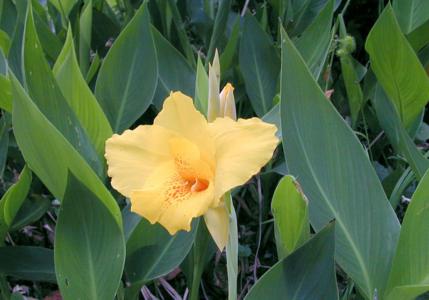
Golden canna
(Canna flaccida)
Also Known As
Golden canna, Swamp canna, Canna lily
About This Plant
Canna flaccida is a species of the Canna genus, known for its bright yellow flowers and large green leaves. It is a herbaceous perennial plant that grows up to 6 feet (183 cm) tall and spreads up to 3 feet (91 cm) wide. The plant is commonly found in wetlands and swamps and is known for its ability to thrive in moist soil.
Plant Care Instructions
Outdoor Size Range
3-6 feet (91-183 cm)
Light Requirements
Yellow canna plants require full sun to partial shade. They can tolerate direct sunlight but may need some shade during the hottest part of the day.
Humidity Needs
Yellow canna plants prefer high humidity levels, but can tolerate average humidity levels.
Fertilizing Schedule
Yellow canna plants require regular fertilization during the growing season. A balanced fertilizer with equal parts nitrogen, phosphorus, and potassium can be applied every 2-3 weeks.
Pruning Guidelines
Yellow canna plants can be pruned to remove dead or damaged leaves and flowers. Pruning can also help to promote bushier growth and more blooms.
Common Pests and Diseases
Yellow canna plants are generally not susceptible to pests or diseases. However, spider mites and caterpillars can occasionally be a problem.
Indoor Size Range
3-6 feet (91-183 cm)
Watering Schedule
Yellow canna plants require consistently moist soil. They should be watered regularly, especially during dry spells. However, overwatering can cause root rot, so it is important to ensure that the soil is well-draining.
Temperature Range
Yellow canna plants prefer warm temperatures between 60-80°F (15-27°C). They can tolerate cooler temperatures but should be protected from frost.
Growing Season
Yellow canna plants grow best during the summer months, but can be grown year-round in warm climates.
Growing Difficulty Level
Yellow canna plants are relatively easy to grow, as long as they are provided with the right growing conditions. They require regular watering and fertilization, but are otherwise low-maintenance.
USDA Hardiness Zones
Yellow canna plants are hardy in USDA zones 7-11.
Did You Know?
Yellow canna plants are sometimes referred to as 'banana canna' due to their resemblance to banana plants.
