Special Web Offer - Get 50% OFF!
Grab Your Deal Now
PlantSnap
Plant Care
Bodinier's beautyberry
(Callicarpa bodinieri)
Also Known As
Bodinier's beautyberry, Chinese beautyberry, Purple beautyberry
About This Plant
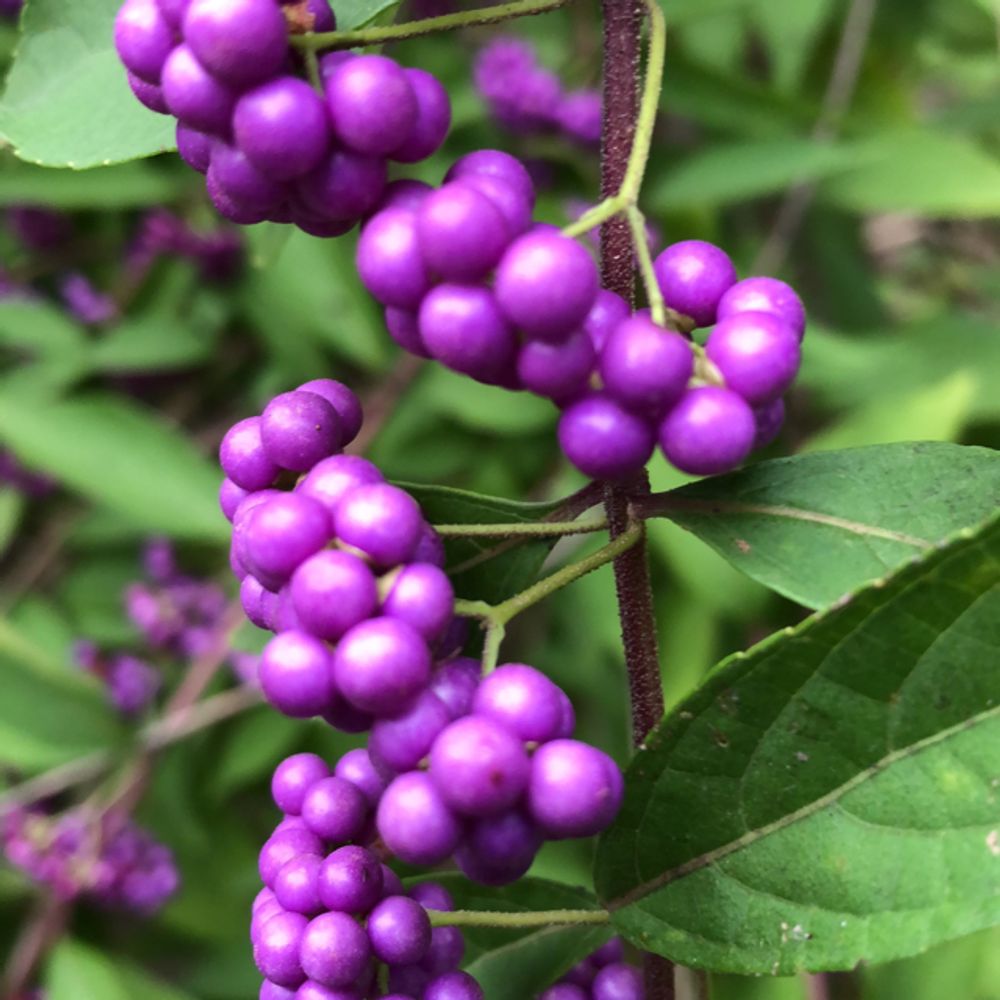
Callicarpa bodinieri is a species of flowering plant in the family Lamiaceae, native to China. It is a deciduous shrub that typically grows to 6-10 feet (1.8-3 meters) tall and wide, with an upright habit and arching branches. The leaves are dark green and ovate, with serrated edges, and turn yellow in the fall. The flowers are small and pale pink or lavender, appearing in clusters in late summer or early fall. The fruit is a bright purple drupe that persists into winter, and is attractive to birds and other wildlife.
Plant Care Instructions
Outdoor Size Range
6-10 feet (1.8-3 meters) tall and wide
Light Requirements
Bodinier's Beautyberry prefers full sun to partial shade. It can tolerate some shade, but may produce fewer flowers and fruit in lower light conditions.
Humidity Needs
This plant does not have any specific humidity requirements.
Fertilizing Schedule
This plant does not have any specific fertilizer requirements, but can benefit from a balanced, slow-release fertilizer applied in early spring.
Pruning Guidelines
Prune Bodinier's Beautyberry in late winter or early spring to remove any dead or damaged wood, and to shape the plant as desired. It can also be pruned more heavily to rejuvenate older plants.
Common Pests and Diseases
Bodinier's Beautyberry is relatively pest and disease resistant, but may be susceptible to scale insects and spider mites.
Indoor Size Range
Not suitable for indoor cultivation.
Watering Schedule
This plant prefers consistently moist soil, but can tolerate short periods of drought once established. Avoid overwatering, as this can lead to root rot.
Temperature Range
Bodinier's Beautyberry is hardy to USDA zones 5-8, and can tolerate a wide range of temperatures. It prefers cool to moderate temperatures, and may suffer in extreme heat.
Growing Season
Bodinier's Beautyberry typically blooms in late summer or early fall, and the fruit persists into winter. It is deciduous, and its leaves turn yellow in the fall before dropping.
Growing Difficulty Level
Bodinier's Beautyberry is relatively easy to grow and care for, and is a good choice for beginner gardeners.
USDA Hardiness Zones
5-8
Did You Know?
The fruit of Bodinier's Beautyberry has been used in traditional Chinese medicine to treat a variety of ailments, including rheumatism and malaria.