Special Web Offer - Get 50% OFF!
Grab Your Deal Now
PlantSnap
Plant Care
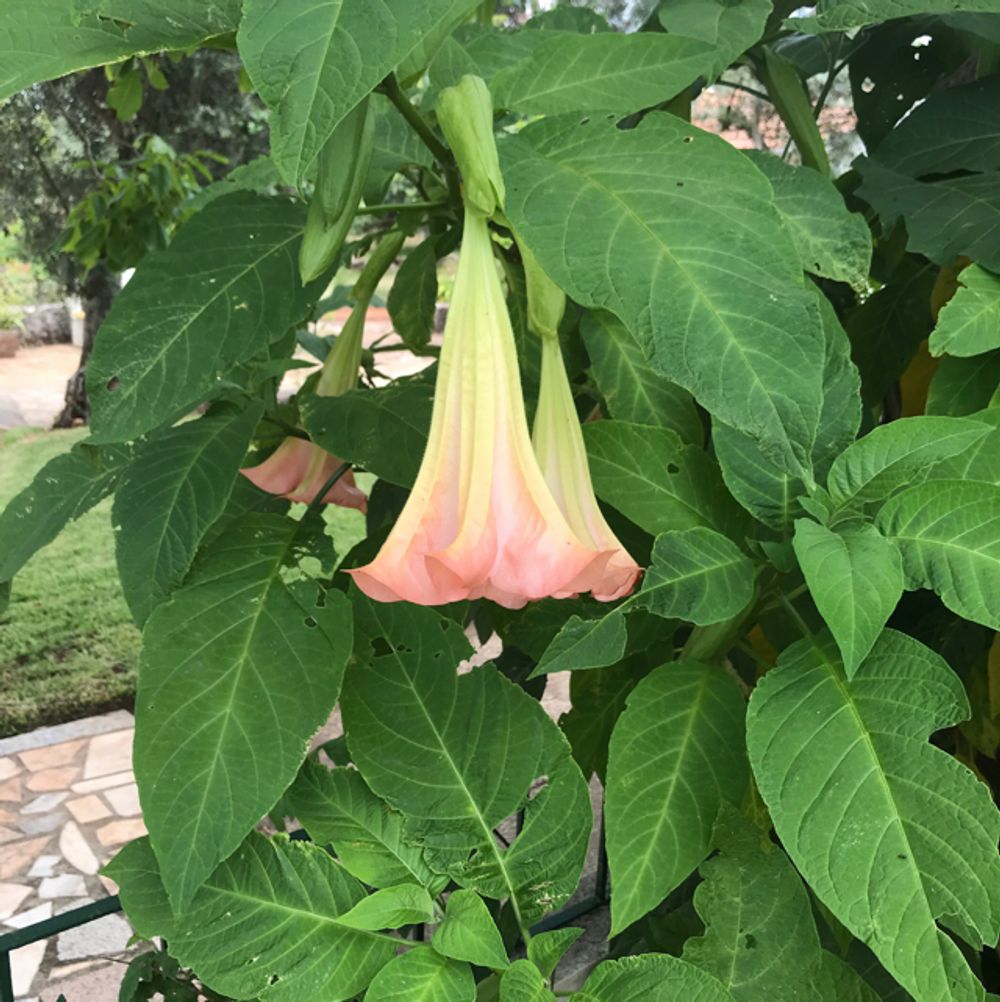
Angel's trumpet
(Brugmansia suaveolens)
Also Known As
Angel's trumpet, Datura, Deadly nightshade, Hells bells
About This Plant
Brugmansia suaveolens is a species of flowering plant in the family Solanaceae, native to South America. It is a small tree-like shrub or bush that can grow up to 6 meters tall in the wild. The plant has large, trumpet-shaped flowers that can be white, peach, pink, or yellow, and they are highly fragrant especially in the evening. The leaves are oval-shaped and can grow up to 30 cm long.
Plant Care Instructions
Outdoor Size Range
6-20 feet (1.8-6 meters)
Light Requirements
Angel's Trumpet prefers full sun to partial shade. It needs at least 6 hours of direct sunlight per day for optimal growth.
Humidity Needs
Angel's Trumpet prefers high humidity levels, around 60-70%. It is recommended to use a humidifier or mist the leaves regularly to maintain adequate humidity levels.
Fertilizing Schedule
Angel's Trumpet requires regular fertilization during the growing season. Use a balanced fertilizer with a ratio of 10-10-10 every 2-3 weeks. Reduce fertilization during the dormant season.
Pruning Guidelines
The plant requires regular pruning to maintain its shape and size. Prune in late winter or early spring before new growth appears. Remove any dead, damaged or diseased branches.
Common Pests and Diseases
Common pests include spider mites, whiteflies, aphids, and mealybugs. Diseases include powdery mildew, leaf spot, and root rot.
Indoor Size Range
36-60 inches (91-152 cm)
Watering Schedule
The plant requires regular watering, especially during the growing season. It is important to keep the soil consistently moist but not waterlogged. Reduce watering during the dormant season.
Temperature Range
The plant prefers warm temperatures between 60-75°F (15-24°C). It is important to protect the plant from frost and extreme temperatures.
Growing Season
Angel's Trumpet grows best during the warm months of spring and summer. It enters a dormant phase during the fall and winter months.
Growing Difficulty Level
Angel's Trumpet is considered moderately difficult to grow. It requires specific growing conditions and regular maintenance, but it is relatively easy to propagate from cuttings.
USDA Hardiness Zones
Angel's Trumpet is hardy in USDA zones 9-11.
Did You Know?
In some cultures, Angel's Trumpet is believed to have hallucinogenic properties and has been used in shamanic rituals. However, the plant is highly toxic and can cause hallucinations, delirium, and even death if ingested.
