Special Web Offer - Get 50% OFF!
Grab Your Deal Now
PlantSnap
Plant Care
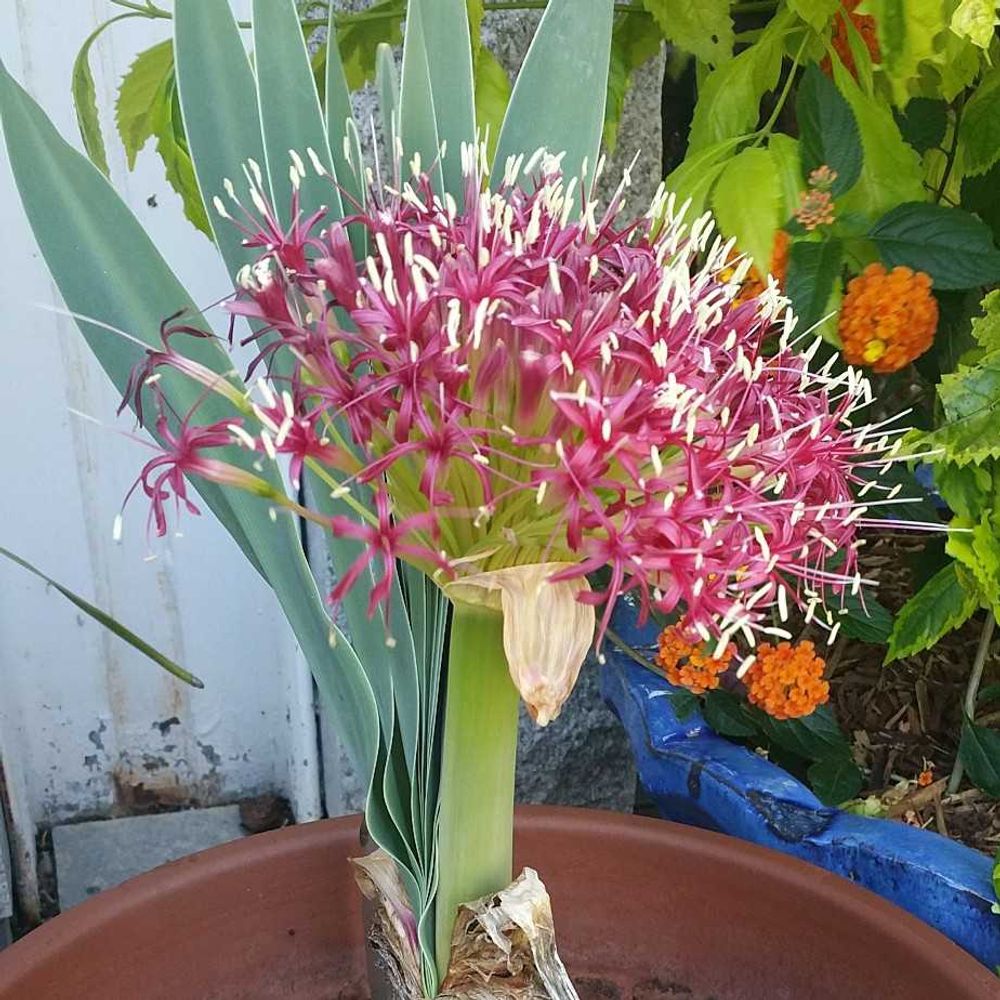
Cape poison bulb
(Boophone disticha)
Also Known As
Cape poison bulb, Poison bulb, African onion, Ghaap
About This Plant
Boophone disticha is a species of flowering plant in the Amaryllidaceae family. It is a bulbous perennial with a large, spherical, underground bulb, and produces a single, erect, smooth, greyish-green leaf that can grow up to 1.5 m (4.9 ft) tall. The plant produces a tall inflorescence with pink to deep red flowers that bloom from the bottom upwards.
Plant Care Instructions
Outdoor Size Range
Height: 1.5-2 m (4.9-6.6 ft), Spread: 1-1.5 m (3.3-4.9 ft)
Light Requirements
Boophone disticha prefers full sun to partial shade. It can tolerate direct sunlight, but it is best to provide some shade during the hottest part of the day.
Humidity Needs
Boophone disticha prefers low to moderate humidity levels. It can tolerate dry conditions, but it is best to provide some humidity during the growing season.
Fertilizing Schedule
Fertilize the plant with a balanced fertilizer every 2-3 weeks during the growing season. Reduce fertilization during the dormant period.
Pruning Guidelines
Remove spent flowers and yellowing leaves as needed. Cut back the foliage to ground level after it dies back naturally.
Common Pests and Diseases
Boophone disticha is susceptible to mealybugs, scale insects, and spider mites. It can also be affected by fungal diseases if the soil is too moist.
Indoor Size Range
Not suitable for indoor cultivation
Watering Schedule
Water the plant regularly during the growing season, but allow the soil to dry out slightly between waterings. Reduce watering during the dormant period.
Temperature Range
Boophone disticha prefers warm temperatures between 18-28°C (64-82°F). It can tolerate cooler temperatures, but not frost.
Growing Season
Boophone disticha grows actively during the summer months, and becomes dormant during the winter.
Growing Difficulty Level
Boophone disticha is considered moderately difficult to grow. It requires specific growing conditions and can be toxic if ingested.
USDA Hardiness Zones
Boophone disticha is hardy in USDA zones 9-11.
Did You Know?
Boophone disticha is known for its toxic properties, and has been used by indigenous people in southern Africa for hunting and as a poison for their arrows.
