Special Web Offer - Get 50% OFF!
Grab Your Deal Now
PlantSnap
Plant Care
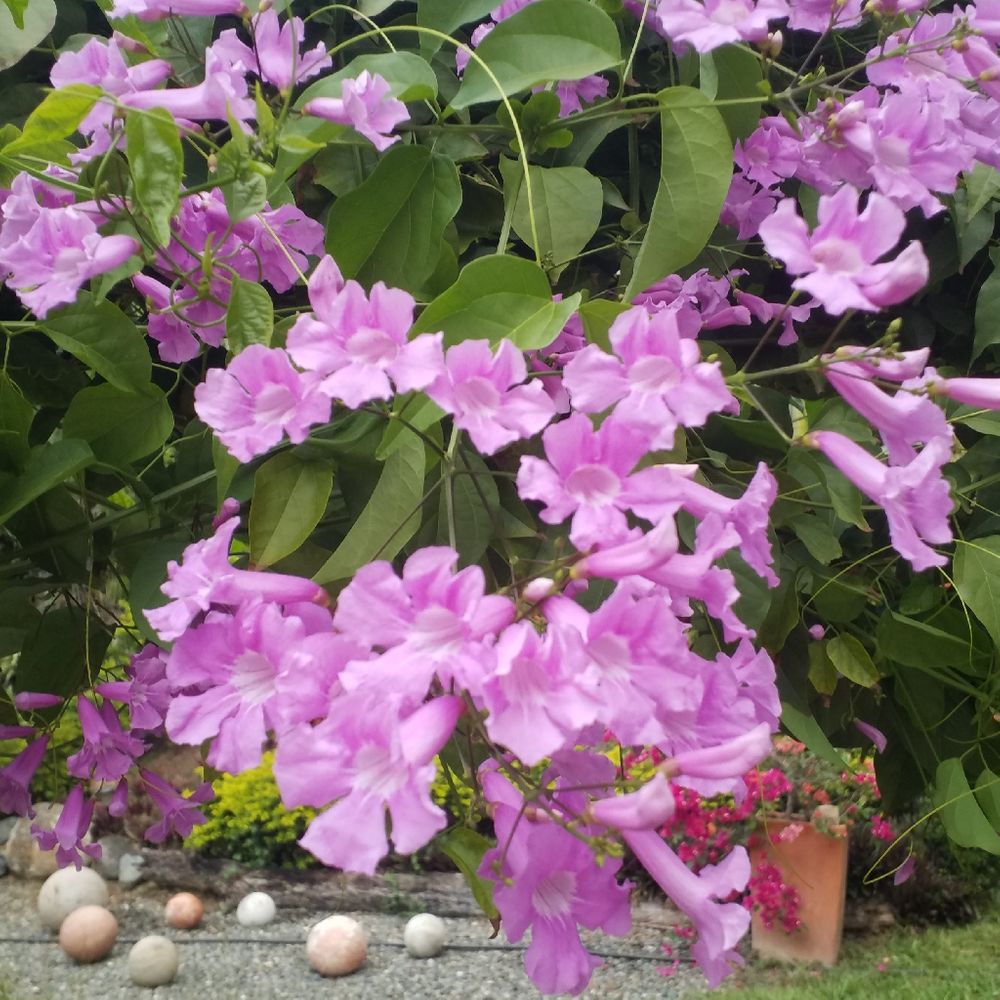
Aequinoctial bignonia
(Bignonia aequinoctialis)
Also Known As
Aequinoctial bignonia, Yellow trumpet vine, Yellow bignonia, Trumpet flower
About This Plant
Bignonia aequinoctialis is a species of flowering plant in the family Bignoniaceae. It is a woody vine that can grow up to 30 feet (9 meters) long. It has large, trumpet-shaped flowers that are yellow with orange stripes and bloom in the spring and summer.
Plant Care Instructions
Outdoor Size Range
Can grow up to 30 feet (9 meters) long.
Light Requirements
Bignonia aequinoctialis prefers full sun to partial shade. It needs at least 6 hours of direct sunlight per day.
Humidity Needs
Bignonia aequinoctialis prefers moderate humidity levels. Mist the leaves with water occasionally to increase humidity.
Fertilizing Schedule
Fertilize the plant once a month during the growing season with a balanced fertilizer.
Pruning Guidelines
Prune the plant in the late winter or early spring to control its size and shape.
Common Pests and Diseases
Bignonia aequinoctialis is generally not prone to pests or diseases, but it can be affected by spider mites and scale insects.
Indoor Size Range
Not suitable for indoor cultivation.
Watering Schedule
Water the plant deeply once a week during the growing season. Reduce watering in the winter months.
Temperature Range
Bignonia aequinoctialis prefers warm temperatures and is not frost-tolerant. It can be grown in USDA hardiness zones 9 to 11.
Growing Season
The growing season for Bignonia aequinoctialis is in the spring and summer.
Growing Difficulty Level
Bignonia aequinoctialis is moderately difficult to grow. It requires regular pruning and can be susceptible to pests and diseases.
USDA Hardiness Zones
USDA hardiness zones 9 to 11.
Did You Know?
In some parts of the world, Bignonia aequinoctialis is considered an invasive species because of its ability to grow quickly and cover other plants.