Special Web Offer - Get 50% OFF!
Grab Your Deal Now
PlantSnap
Plant Care
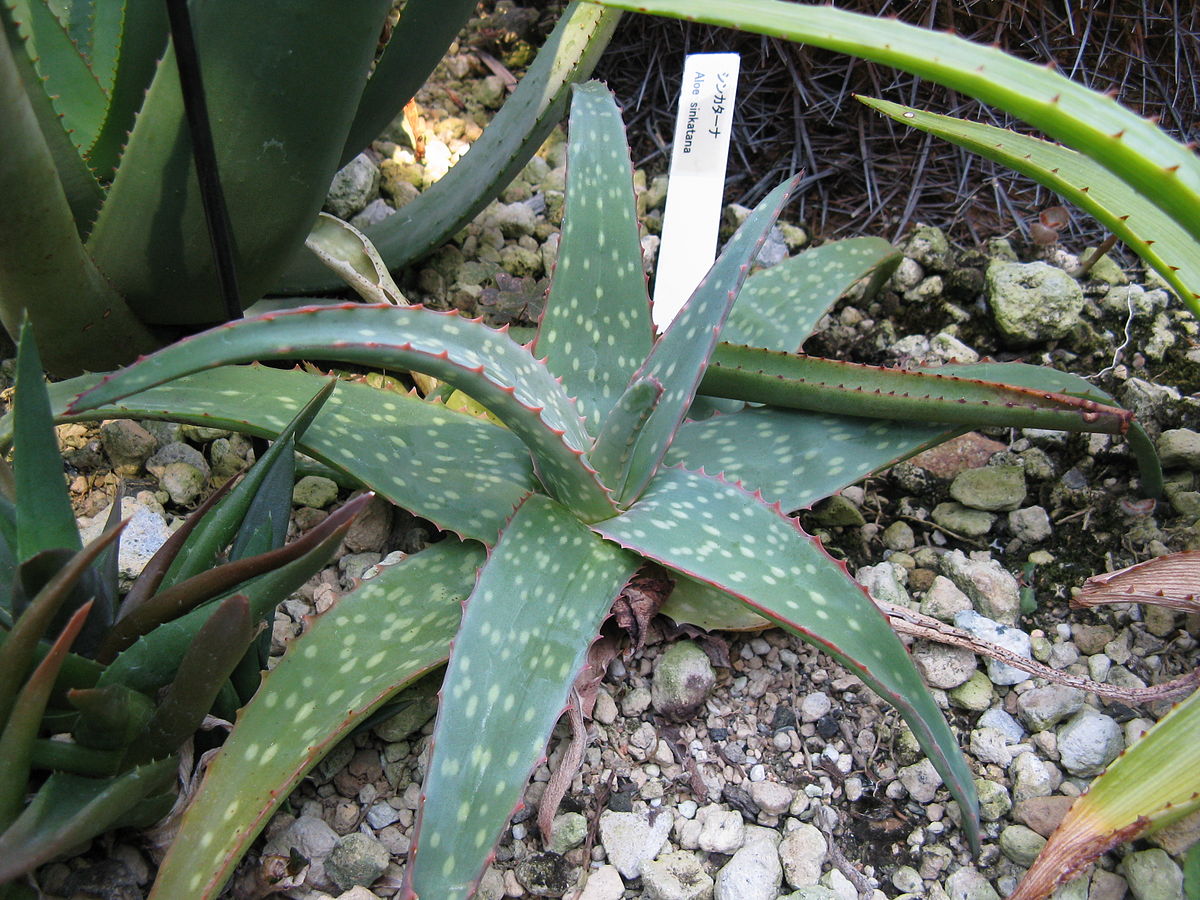
Sinkata aloe
(Aloe sinkatana)
Also Known As
Sinkata aloe, African aloe, Sinkatana aloe
About This Plant
Aloe sinkatana is a succulent plant species that is native to Eritrea, Ethiopia, and Sudan. It has rosettes of triangular leaves that are green with white spots and have small teeth on the margins. The plant produces tall spikes of tubular, orange-red flowers.
Plant Care Instructions
Outdoor Size Range
1-2 feet (30-60 cm)
Light Requirements
Aloe sinkatana prefers bright, indirect sunlight. It can tolerate some direct sunlight, but too much can cause the leaves to burn.
Humidity Needs
Aloe sinkatana prefers low humidity levels and can tolerate dry air.
Fertilizing Schedule
Fertilize the plant once a month during the growing season with a balanced fertilizer.
Pruning Guidelines
Remove any dead or damaged leaves as needed. Aloe sinkatana does not require heavy pruning.
Common Pests and Diseases
Common pests include mealybugs and spider mites. Diseases are rare but can occur if the plant is overwatered.
Indoor Size Range
6-12 inches (15-30 cm)
Watering Schedule
Water the plant deeply but infrequently, allowing the soil to dry out completely between waterings. In the winter, reduce watering to once a month.
Temperature Range
The plant prefers temperatures between 60-80°F (15-27°C). It can tolerate temperatures as low as 40°F (4°C) but should be protected from frost.
Growing Season
The plant can be grown year-round but grows best in the spring and summer.
Growing Difficulty Level
Aloe sinkatana is relatively easy to grow and care for, making it a good choice for beginners.
USDA Hardiness Zones
Aloe sinkatana is not cold hardy and should be grown indoors in USDA hardiness zones 9-11.
Did You Know?
Aloe sinkatana is commonly used in traditional medicine to treat skin conditions and digestive problems in its native range.
