Special Web Offer - Get 50% OFF!
Grab Your Deal Now
PlantSnap
Plant Care
Japanese maple
(Acer palmatum)
Also Known As
Japanese maple, Maple, Japanese maple tree
About This Plant
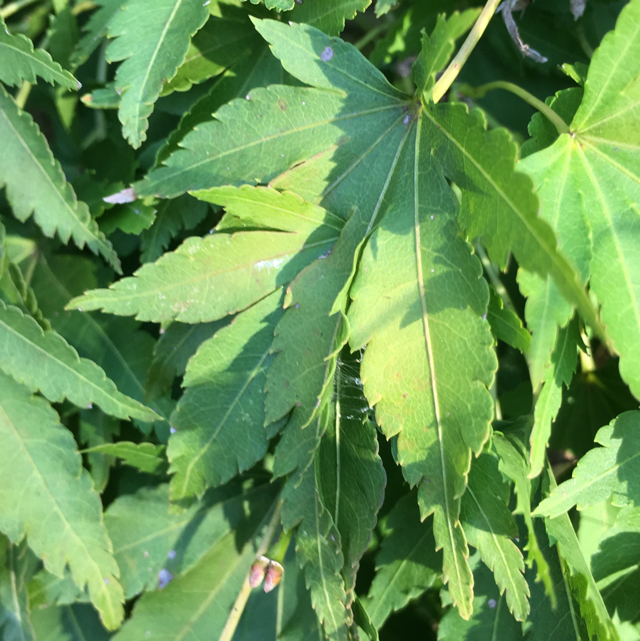
Acer palmatum is a deciduous tree that is native to Japan, Korea, and China. It is a small tree that typically grows up to 20 feet tall and has a spread of up to 25 feet. The leaves are palmate and have 5-7 lobes, with a bright green color in the spring and summer and a red or orange color in the fall. The tree produces small, red flowers in the spring, which are followed by winged seeds.
Plant Care Instructions
Outdoor Size Range
15-25 feet (4.5-7.6 m)
Light Requirements
Acer palmatum prefers partial shade to full sun. In warmer climates, it benefits from some afternoon shade to prevent leaf scorch.
Humidity Needs
The tree prefers moderate to high humidity levels. Mist the leaves regularly to increase humidity, especially in dry indoor environments.
Fertilizing Schedule
Fertilize the tree in the spring with a slow-release fertilizer that is high in nitrogen. Avoid fertilizing in the fall, as this can promote late-season growth that is susceptible to winter damage.
Pruning Guidelines
Prune the tree in late winter or early spring to remove damaged or diseased branches, and to shape the tree. Avoid pruning in the fall, as this can stimulate late-season growth that is susceptible to winter damage.
Common Pests and Diseases
Common pests include aphids, scale insects, and spider mites. Diseases include verticillium wilt and powdery mildew.
Indoor Size Range
36-60 inches (91-152 cm)
Watering Schedule
Water the tree deeply once a week during the growing season, and reduce watering in the fall to prepare the tree for winter dormancy. Avoid overwatering, as this can cause root rot.
Temperature Range
Acer palmatum prefers cool to moderate temperatures, with a range of 50-80°F (10-27°C). It is hardy to USDA zones 5-8.
Growing Season
The growing season for Acer palmatum is typically from late spring to early fall.
Growing Difficulty Level
Acer palmatum is moderately difficult to grow, as it has specific light, temperature, and humidity requirements. It is also susceptible to pests and diseases.
USDA Hardiness Zones
USDA hardiness zones 5-8
Did You Know?
In Japan, Acer palmatum is known as momiji, which means 'baby's hands' in Japanese, because of the shape of its leaves.
