Special Web Offer - Get 50% OFF!
Grab Your Deal Now
PlantSnap
Plant Care
European silver fir
(Abies alba)
Also Known As
European silver fir, Silver fir, White fir
About This Plant
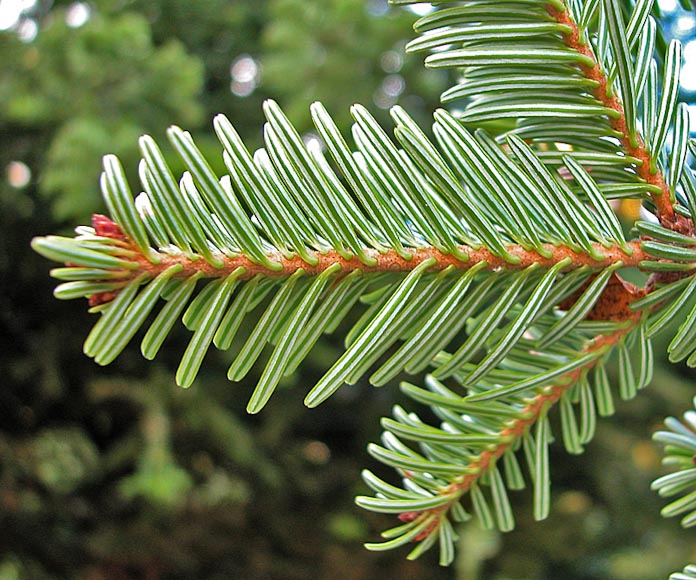
Abies alba is a large evergreen coniferous tree that can grow up to 60 meters (197 feet) tall. It has a conical shape and a straight trunk with a diameter of up to 2 meters (6.5 feet). The bark is smooth and grayish-brown, becoming fissured and scaly with age. The needles are flat and dark green, measuring 1-3 cm (0.4-1.2 inches) long and arranged spirally on the branches. The cones are cylindrical and upright, measuring 10-20 cm (4-8 inches) long and 4-5 cm (1.6-2 inches) broad, with slightly reflexed bracts. The seeds are brown and winged, measuring 6-8 mm (0.24-0.31 inches) long.
Plant Care Instructions
Outdoor Size Range
Can grow up to 60 meters (197 feet) tall and 2 meters (6.5 feet) in diameter
Light Requirements
Abies alba prefers full sun to partial shade. It can tolerate some shade but will grow more slowly and have thinner foliage.
Humidity Needs
Abies alba prefers moderate to high humidity levels, but can tolerate some dryness.
Fertilizing Schedule
Abies alba does not require much fertilizer, but can benefit from an annual application of a balanced fertilizer in early spring.
Pruning Guidelines
Pruning is not necessary for Abies alba, but can be done to remove dead or damaged branches.
Common Pests and Diseases
Common pests and diseases for Abies alba include adelgids, aphids, bark beetles, and rusts.
Indoor Size Range
Not suitable for indoor cultivation
Watering Schedule
This plant prefers consistently moist but well-drained soil. It should be watered deeply and regularly, especially during dry spells.
Temperature Range
This plant prefers cool to cold temperatures, with an ideal range of 0-15°C (32-59°F). It can tolerate temperatures as low as -40°C (-40°F).
Growing Season
The growing season for Abies alba is from late spring to early autumn.
Growing Difficulty Level
Abies alba is considered moderately difficult to grow, as it requires specific growing conditions and can be susceptible to pests and diseases.
USDA Hardiness Zones
Abies alba is hardy in USDA zones 4-7.
Did You Know?
Abies alba is the national tree of Austria.
